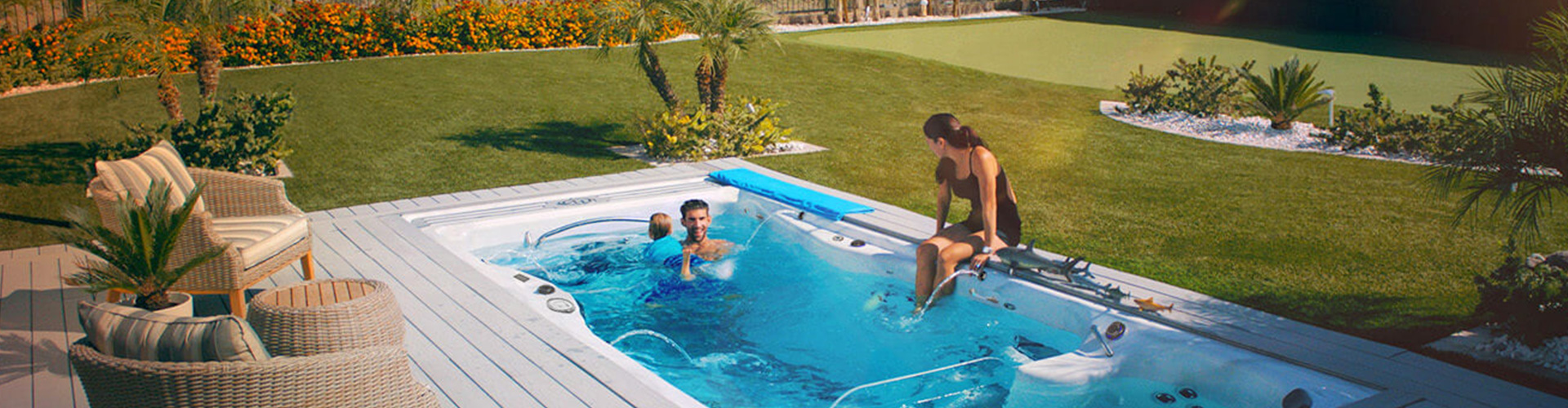

Appearance
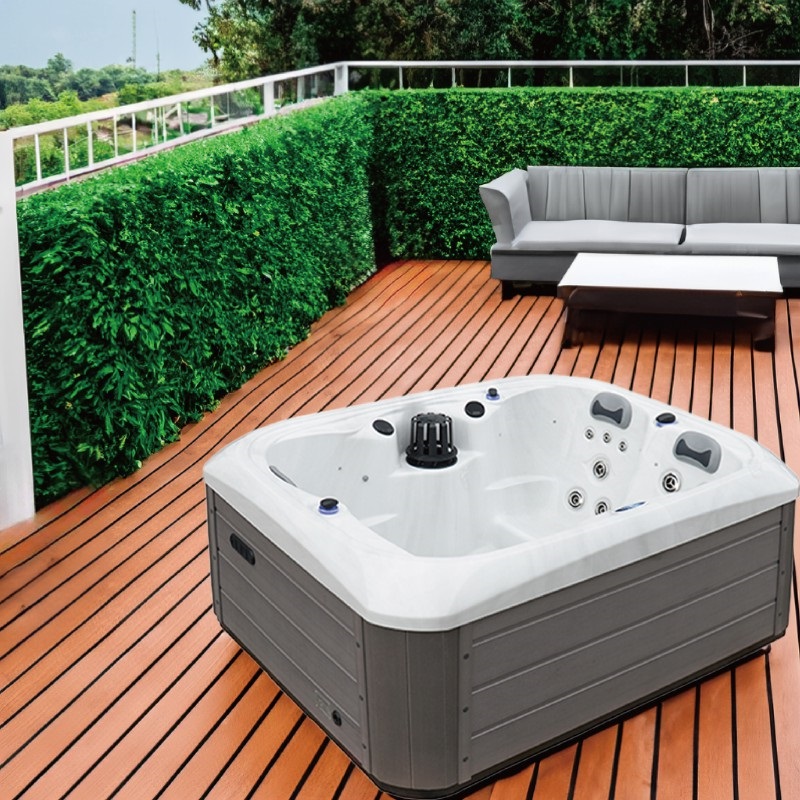
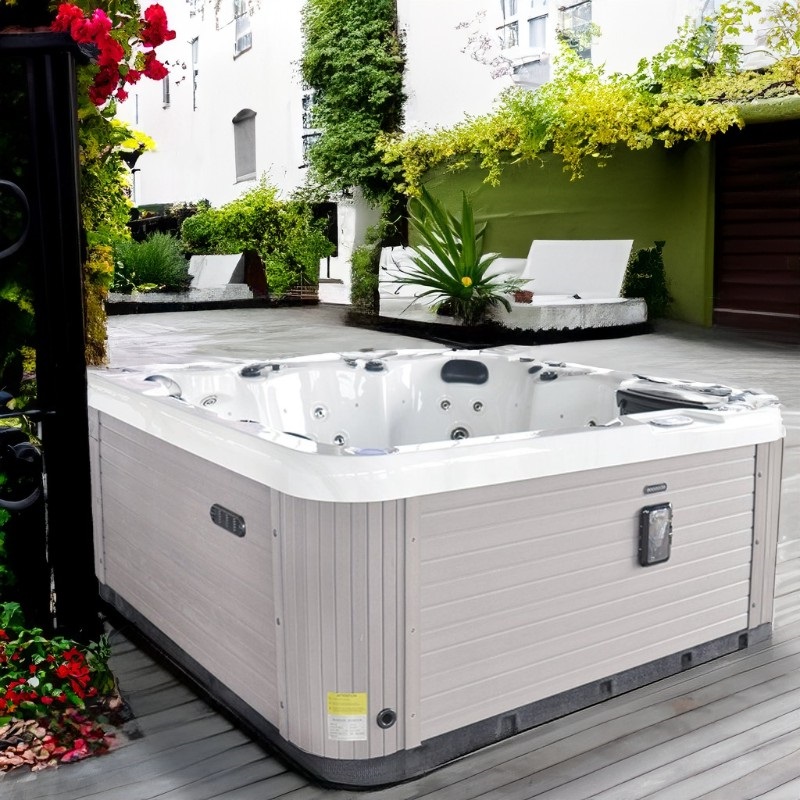
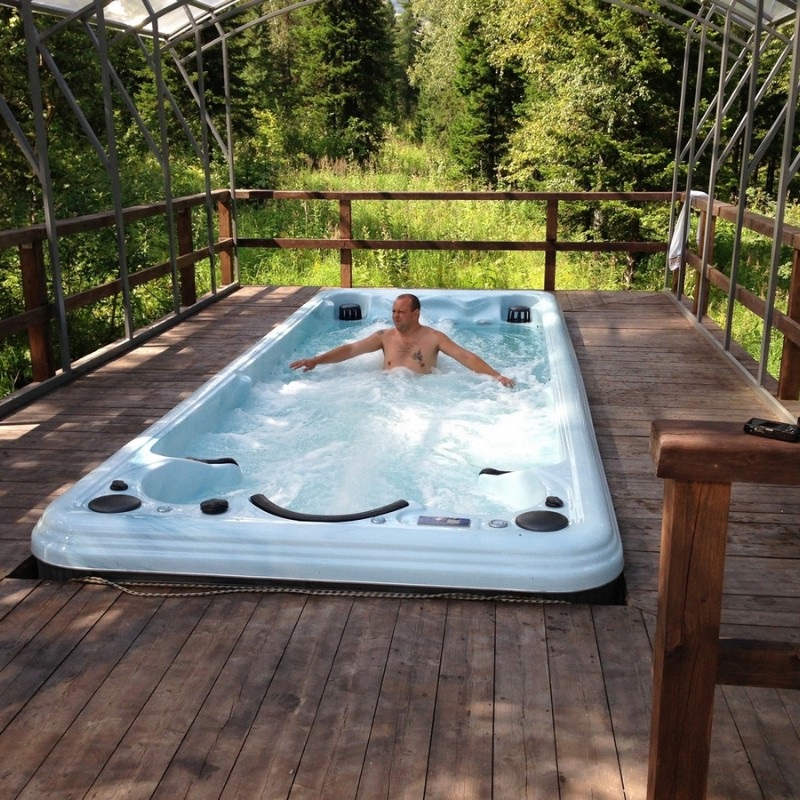
Swim Spa vs. Pool: Which Is Better for Fitness and Relaxation?
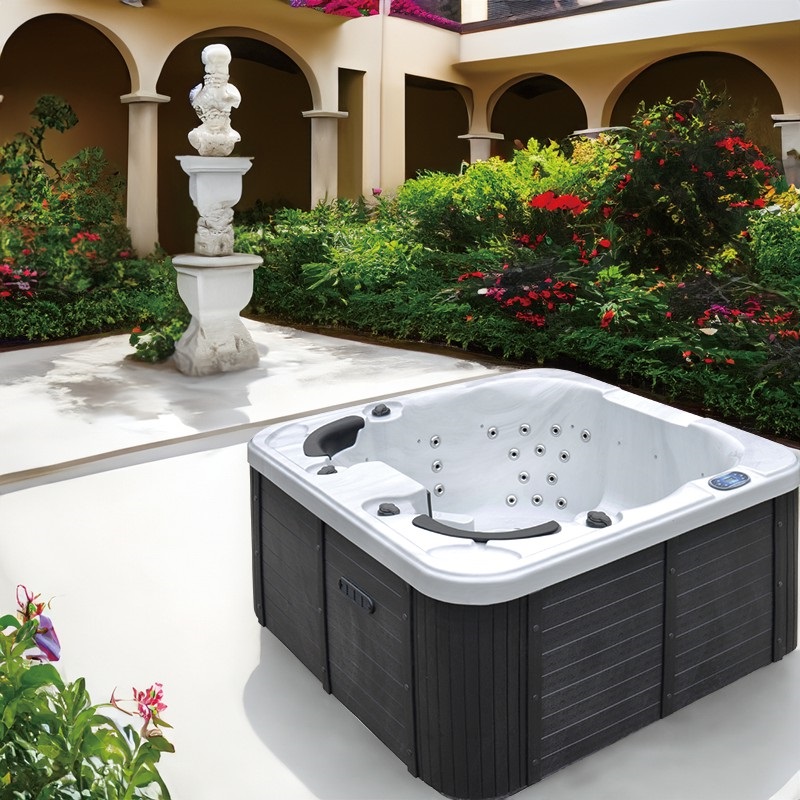
For most homeowners prioritizing daily fitness, warm-water hydrotherapy, and year-round usability, a swim spa is the better choice; for large-scale summer entertaining, diving, and open-water play, a traditional swimming pool remains unmatched. While an inground pool offers expansive surface area for families and guests, a swim spa combines an adjustable counter-current swim lane with ergonomic massage seating in a compact, insulated vessel that operates comfortably through every season.
Choosing between a swim spa and a conventional pool comes down to how you actually plan to use your backyard water feature week after week. Many buyers picture themselves swimming morning laps in a 32-foot inground pool, only to discover that short wall-to-wall distances interrupt their stroke rhythm and high heating bills limit use to three or four warm months. Conversely, someone who wants to host ten neighborhood kids for cannonballs and pool volleyball will find a 15-foot swim spa far too tight. Comparing both options across workout quality, physical recovery, space requirements, installation timelines, and long-term operating expenses clarifies which investment fits your property and routine.
How a Swim Spa Differs From a Traditional Pool
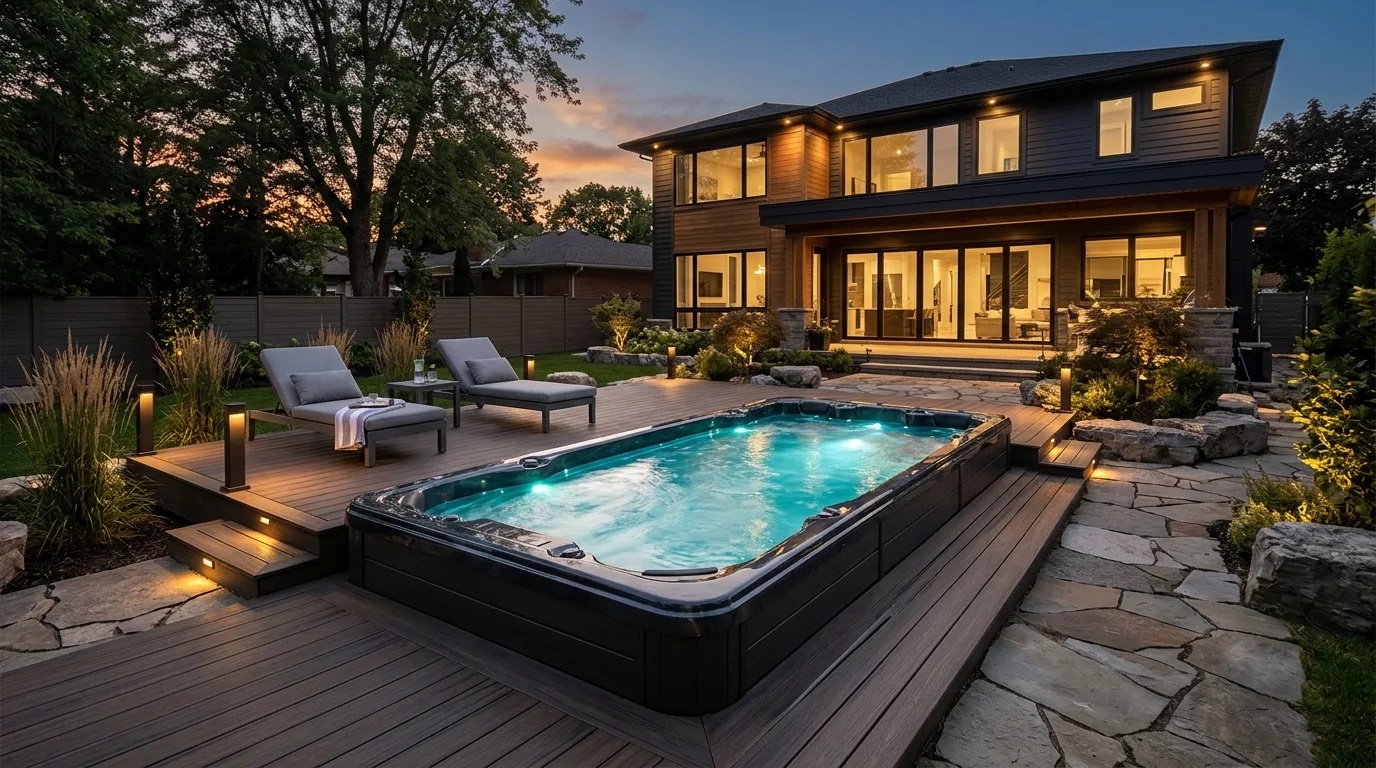
A swim spa is a self-contained, insulated acrylic vessel engineered with an internal propulsion current and built-in heating, whereas a traditional pool is a large static basin designed for open-water recreation. Understanding their core mechanical and structural differences helps explain why each performs so differently for exercise and relaxation.
Most residential swim spas measure between 12 and 19 feet in length, 7.5 to 8 feet in width, and 48 to 60 inches in depth. They hold roughly 1,200 to 2,500 gallons of water and arrive from the factory pre-plumbed with high-efficiency heaters, circulation pumps, ozone or UV sanitation systems, and a full-foam insulated cabinet. Instead of pushing off a wall to swim from one end to the other, swimmers move continuously in place against a broad, adjustable stream of water generated by high-volume swim jets, a propeller, or a paddlewheel propulsion unit.
A traditional residential inground pool typically measures 14 by 28 feet up to 20 by 40 feet and holds anywhere from 10,000 to over 20,000 gallons of water. Constructed from concrete, vinyl-lined steel, or molded fiberglass, a standard pool relies on external filtration pads and large gas heaters or electric heat pumps. Because the water stays still unless you move through it, swimming laps requires frequent flip turns, and keeping that massive water volume warm outside of peak summer weather demands substantial energy.
Fitness Performance: Counter-Current Training vs. Open-Water Laps
Swim spas deliver a superior structured workout because their continuous current eliminates turn interruptions and supports full-body aquatic resistance training in temperature-controlled water. Traditional pools still appeal to recreational swimmers who prefer gliding freely across open water without mechanical flow, yet they present practical limitations for serious fitness routines.
Continuous Swimming Without Flip Turns
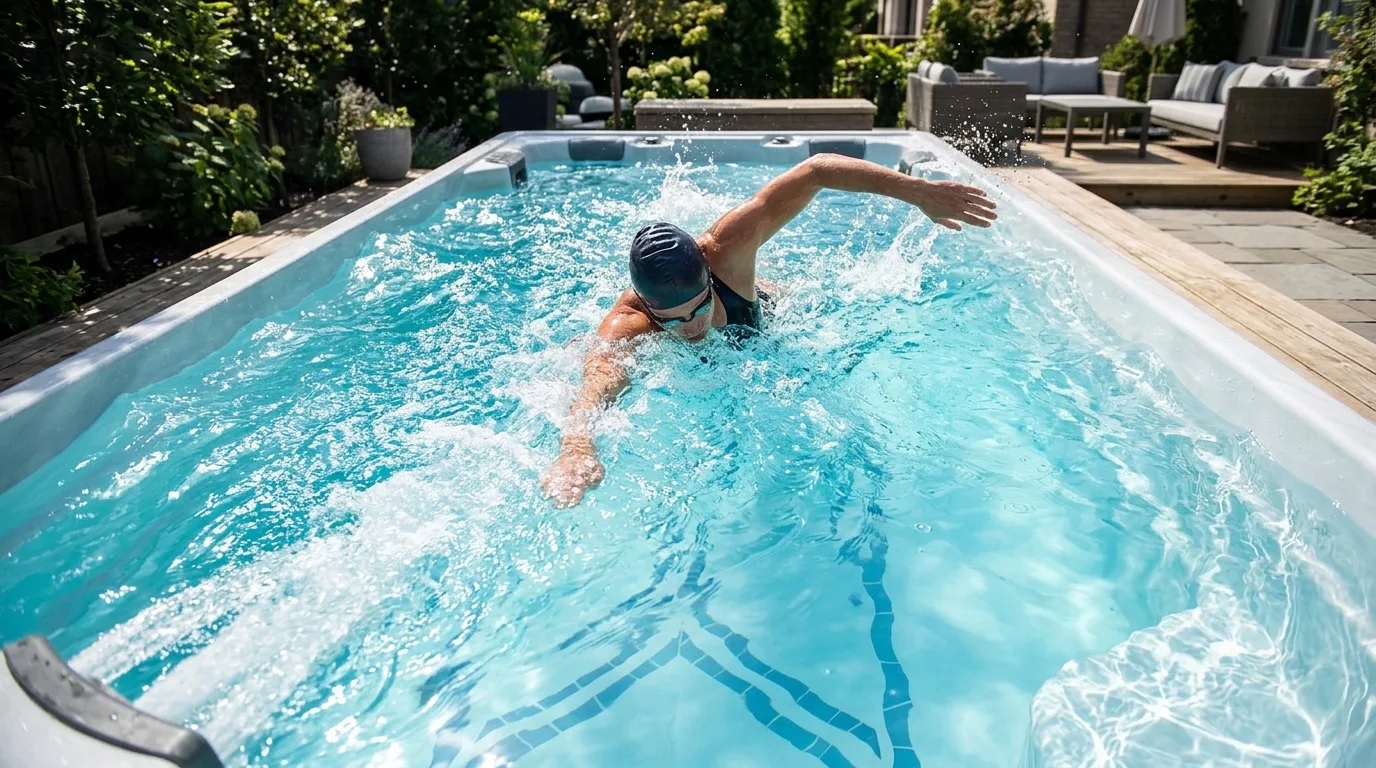
In a standard 28-foot or 32-foot backyard pool, an adult freestyle swimmer takes only four to six strokes before reaching the opposite wall. Constant stopping, turning, and pushing off breaks cardiovascular pacing and reduces actual time spent pulling against water resistance. A swim spa solves this constraint by creating an endless lane. By dialing the current speed up or down—often through digital topside controls or programmable workout intervals—beginners can practice relaxed breaststroke while competitive triathletes can train at an aggressive sub-1:15 per 100-yard pace without ever touching a wall.
Low-Impact Aquatic Cross-Training
Beyond lap swimming, a swim spa functions as a compact aquatic gym. Water naturally supports roughly 80 to 90 percent of your body weight depending on immersion depth, shielding knees, hips, and lower backs from repetitive impact stress. Many models include built-in anchor points for resistance rowing bars, chest-press bands, and underwater tethers, along with flat, slip-resistant floors designed for aquatic jogging against the current. Maintaining water around 82°F to 86°F keeps muscles warm and flexible throughout a 45-minute session, which is noticeably more comfortable for joint mobility than jumping into an unheated 74°F backyard pool.
Relaxation and Hydrotherapy: Built-In Recovery vs. Casual Lounging
For targeted muscle relief and warm-water soaking, a swim spa outperforms a standard pool by offering dedicated hydrotherapy jets and water temperatures up to 104°F. Pools excel at laid-back, sun-drenched lounging, floating on inflatables, and social play, though they cannot replicate deep-tissue hydro-massage without adding a separate spillover spa.
Targeted Jet Massage and Dual-Zone Control
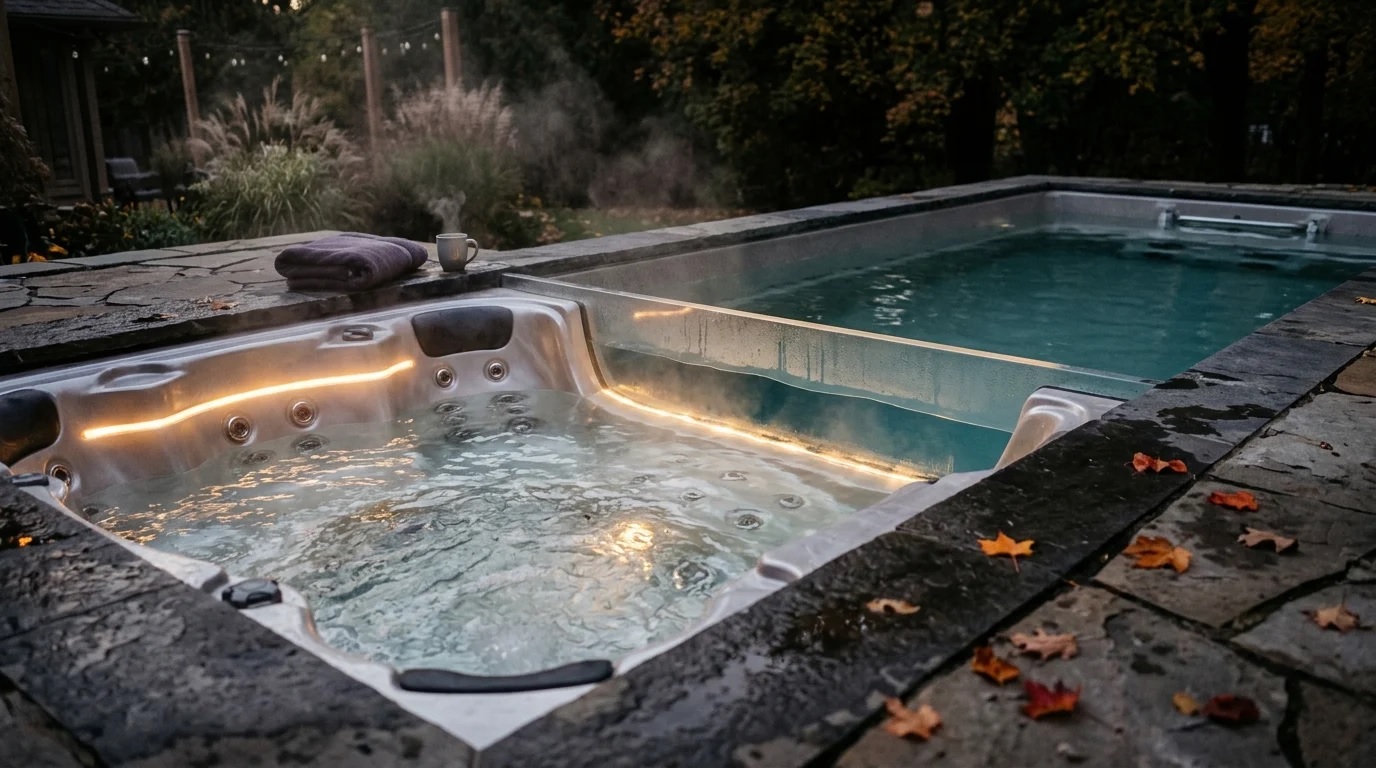
Every swim spa incorporates contoured hydrotherapy seats equipped with directional jets aimed at the neck, shoulders, mid-back, lumbar region, and calves. In single-zone models, you can raise the entire vessel's temperature from an 82°F workout setting to 100°F or 102°F for evening recovery, though heating 1,500 gallons takes several hours. Homeowners who want instant transitions between intense exercise and hot-water soaking often choose a dual-zone swim spa. Dual-zone designs use a solid insulated acrylic divider to separate a cooler 11-to-13-foot swim tank from a dedicated 4-to-6-foot hot tub compartment, letting you finish a hard swim and immediately step into 104°F bubbling water.
Social Floating and Poolside Entertaining
Where a traditional pool clearly leads is casual group relaxation. Wide tanning ledges, shallow beach entries, and deep ends give families room to spread out on foam floats, play water games, and host weekend barbecues without feeling crowded. While a large swim spa comfortably seats four to eight adults around its perimeter benches, it is built for purposeful soaking and exercise rather than large-group recreation.
Space, Installation Timeline, and Total Ownership Costs
A swim spa requires roughly one-quarter of the yard footprint, installs in days rather than months, and costs significantly less to purchase, heat, and maintain than an inground pool. Evaluating site logistics and five-year operating budgets often tips the decision even before buyers compare features.
Footprint and Yard Requirements
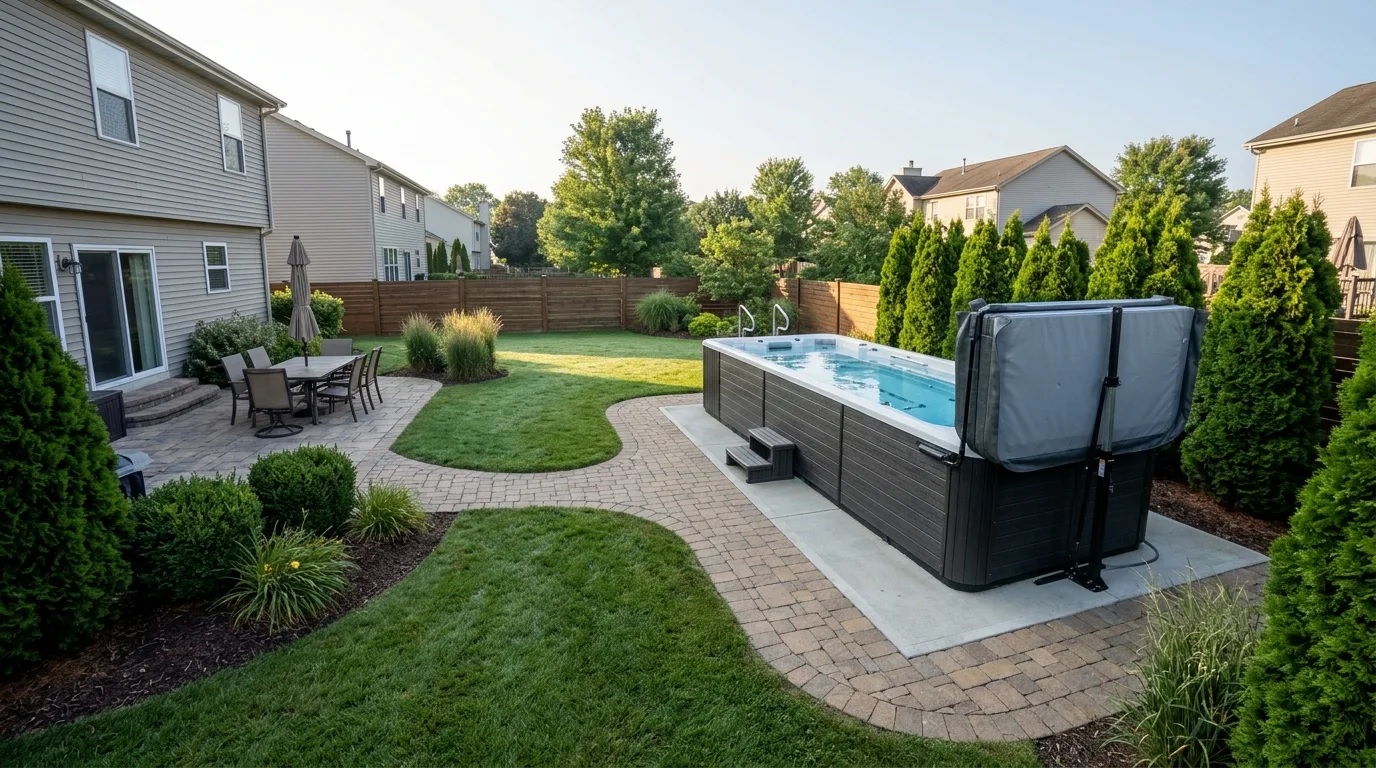
Because a swim spa occupies roughly 100 to 150 square feet, it fits easily onto a suburban patio, a narrow side yard, or a recessed composite deck without sacrificing lawn space for gardens or outdoor dining. You can place it above ground for easy service access, partially recess it into a sloped yard, or sink it flush into a custom vault. An inground pool requires extensive excavation, strict property-line setbacks, utility easement clearances, and surrounding concrete or paver decking, often consuming 800 to 1,500 square feet of total yard area.
Upfront Cost and Setup Speed
Installing a swim spa typically costs between $18,000 and $45,000+ depending on vessel length, propulsion engineering, and dual-zone features. Site preparation involves pouring a level, 4-to-6-inch steel-reinforced concrete pad and having a licensed electrician run a dedicated 240-volt, 50-to-60-amp GFCI circuit. Once the pad cures, a crane or specialized roller crew sets the unit in place, and you can fill, heat, and swim within one to three days. By comparison, a traditional inground fiberglass or gunite pool routinely costs $45,000 to $100,000+ after factoring in excavation, plumbing, plaster, decking, and mandatory perimeter safety fencing, with construction timelines stretching from six to sixteen weeks.
Heating, Water Care, and Four-Season Use
Operating costs favor the swim spa across every climate zone. Holding 1,500 gallons inside a thick, foam-insulated cabinet topped by a tight-sealing lockable thermal cover traps heat efficiently even when outdoor air temperatures drop below freezing. You never have to drain or winterize a swim spa in northern states; instead, you enjoy steamy morning swims and evening hydrotherapy in January. Heating a 15,000-gallon pool during shoulder seasons burns far more electricity or natural gas, and balancing sanitizer and pH levels across ten times more water requires noticeably more weekly chemicals and filter maintenance.
Which Option Fits Your Lifestyle Best?
Select a swim spa if you value daily lap workouts, therapeutic hot-water recovery, compact yard preservation, and four-season use; select a pool if your household prioritizes family play, summer hosting, and open-water swimming. Reviewing your top three backyard goals makes the choice straightforward:
- Choose a swim spa when you want consistent cardio and strength training at home, suffer from joint stiffness or post-workout soreness, live in a region with cool springs, autumns, or snowy winters, or have a smaller urban or suburban lot.
- Choose a traditional pool when you have active children who want room to dive and play, regularly entertain large groups outdoors during warm weather, own a spacious property with open sun exposure, and prefer classic resort-style backyard aesthetics.
Frequently Asked Questions About Swim Spas and Pools
Can You Swim Real Laps in a Swim Spa?
Yes, modern swim spas allow full-stroke freestyle, breaststroke, and butterfly swimming in place against an adjustable current. Quality models use wide, laminar water streams rather than narrow, choppy spa jets, keeping your body centered and buoyant so your stroke mechanics closely mirror open-water swimming.
How Much Does a Swim Spa Cost Monthly?
Most homeowners spend between $50 and $120 per month on electricity and water-care supplies to run a swim spa. Exact electricity usage depends on local kilowatt-hour rates, outdoor winter temperatures, whether you keep the cover closed between sessions, and how warm you maintain the water.
Does a Swim Spa Add Value to a Home?
A swim spa can boost buyer appeal when integrated cleanly into a deck or patio, though portable units are treated as personal property rather than permanent real estate. Recessed or professionally landscaped installations add functional lifestyle appeal without burdening future buyers with high pool maintenance costs.
Is a Dual-Zone Swim Spa Worth It?
A dual-zone swim spa is worth the higher upfront price if you swim vigorously several times a week and also want immediate access to 102°F to 104°F hot tub seating. Having separate temperature controls prevents you from overheating during cardio workouts or waiting hours for the water to warm up afterward.