
Appearance
Endless Pools vs. Swim Spas: Key Differences in Design, Currents, and Cost
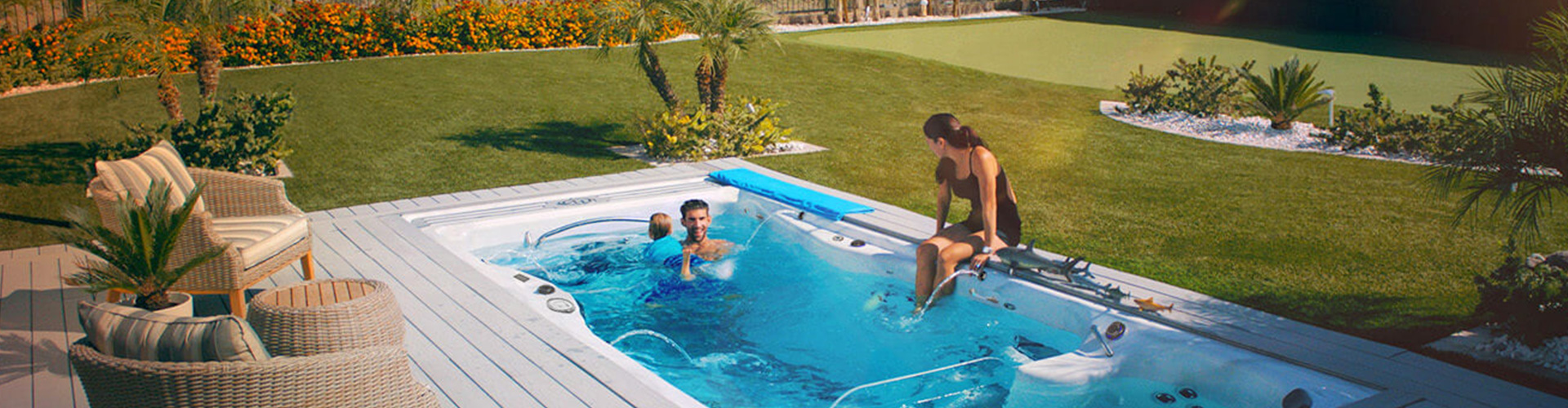
An Endless Pool is a modular, panel-built, vinyl-lined aquatic vessel engineered around a wide laminar propulsion current for stationary lap swimming, while a swim spa is a self-contained, factory-molded acrylic or fiberglass shell that pairs a compact swim lane with heated hydrotherapy seating. Although people often use the two terms interchangeably, they represent distinct engineering approaches to small-footprint aquatic fitness and backyard relaxation.
Part of the confusion stems from brand overlap. Endless Pools, founded in 1988 and now part of Watkins Wellness, pioneered the modular counter-current pool, yet the company also manufactures one-piece acrylic swim spas alongside brands such as Master Spas, Hydropool, Jacuzzi, and SwimEx. Choosing the right option comes down to how you value open-water stroke mechanics, built-in hot tub massage seats, indoor versus outdoor site access, and long-term ownership costs.
Core Structural and Construction Differences
The most fundamental difference between an Endless Pool and a traditional swim spa lies in how each vessel is built, shipped, and assembled on your property.
Modular Panel Engineering in Endless Pools
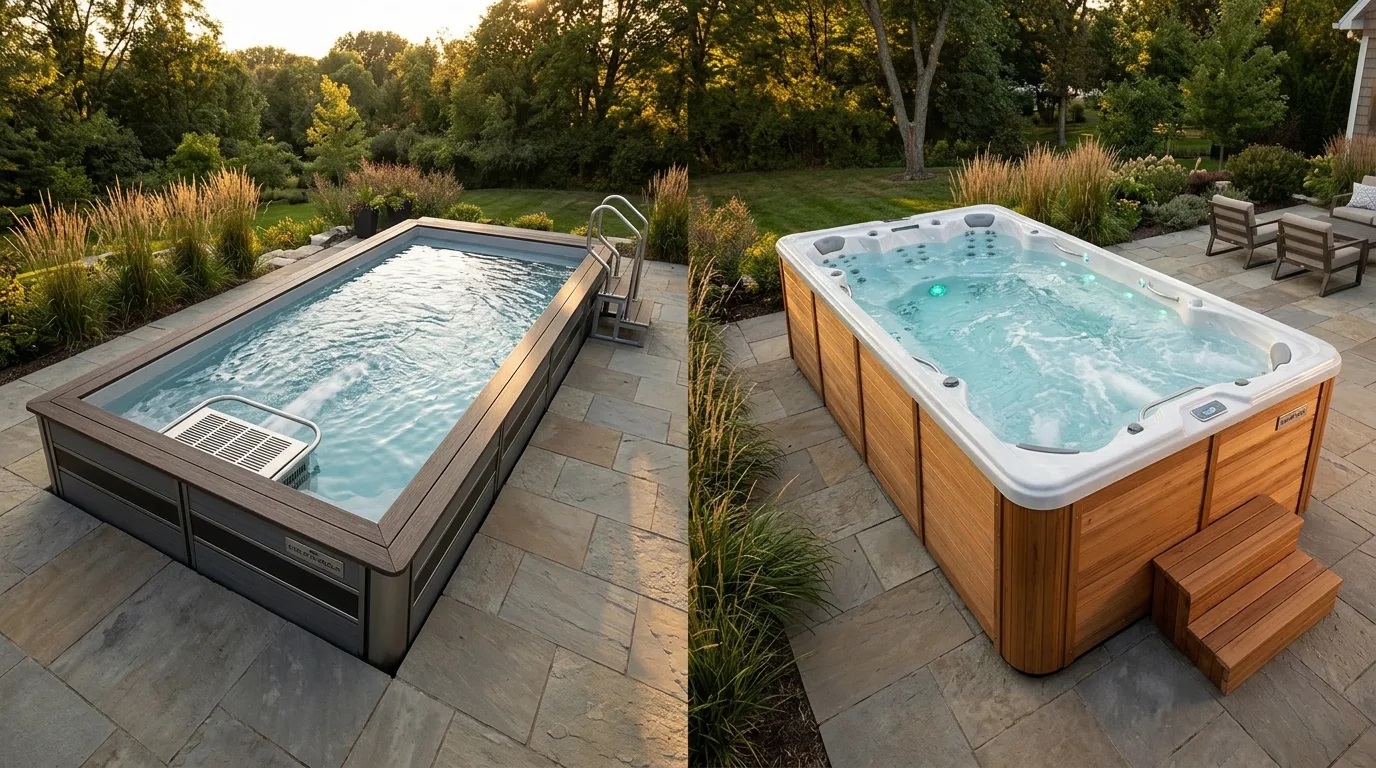
Modular Endless Pools are constructed from heavy-gauge galvanized steel wall panels that bolt together on-site over a level concrete slab. Once the structural perimeter is assembled, installers fit a custom-tailored, heavy-duty vinyl liner inside the basin and finish the top edge with composite or stone coping. Exterior walls can be left above ground with factory skirting, partially recessed into a deck, or sunk fully in-ground.
Because the shell is assembled piece by piece rather than shipped as a rigid tub, buyers can customize interior dimensions to match their space and training goals. Standard interior footprints commonly measure 7 by 14 feet, 8 by 15 feet, or 10 by 16 feet, while water depths range from 39 inches in baseline models up to 60 or 72 inches in deep-water configurations built for vertical aquatic therapy and deep-water running.
One-Piece Molded Acrylic Swim Spas
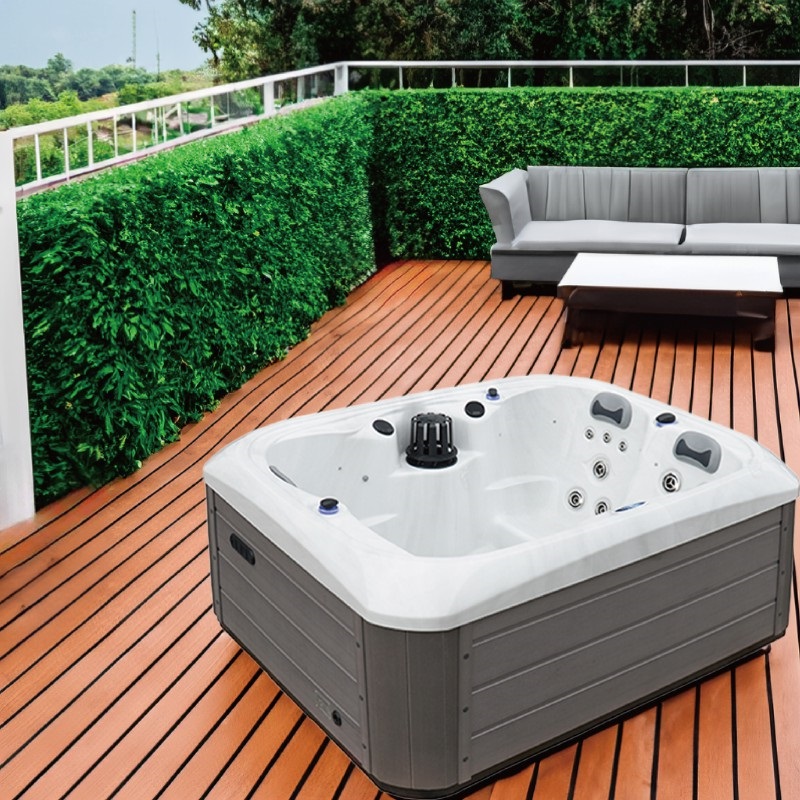
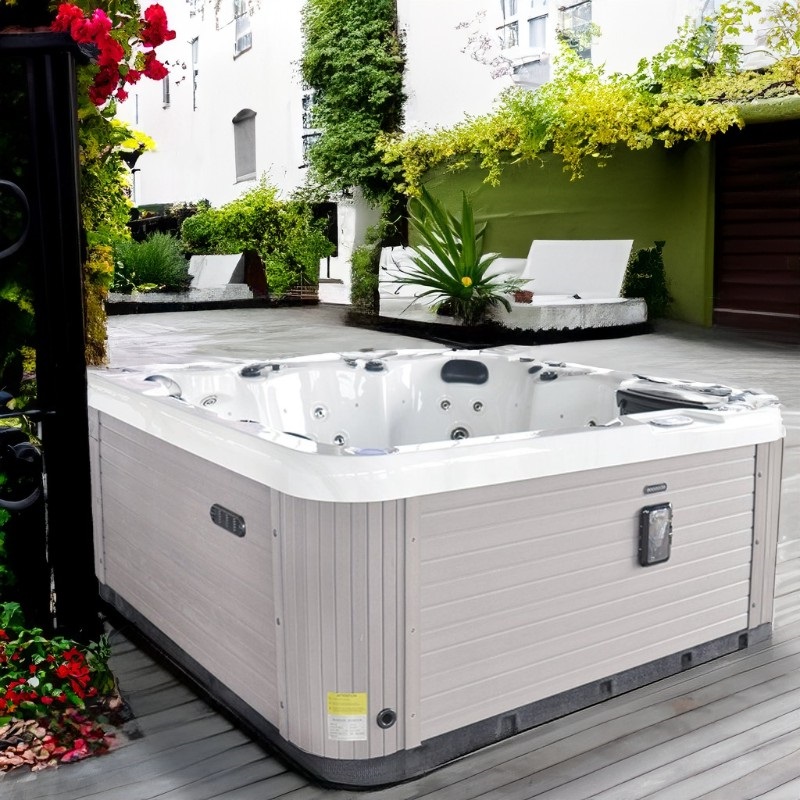
Most swim spas are built like oversized luxury hot tubs. Manufacturers thermoform a single sheet of high-gloss acrylic over a contoured mold, reinforce the underside with fiberglass and steel framing, pack the cavity with high-density foam insulation, and enclose the exterior in a weather-resistant composite cabinet.
Because the shell leaves the factory as a single rigid unit, its width is governed by highway shipping limits. Nearly all one-piece acrylic swim spas measure between 90 and 96 inches wide so they can travel on a standard flatbed trailer without special wide-load permits. Lengths typically run from 12 to 21 feet, and water depths generally sit between 42 and 52 inches.
Swim Current Technology and Water Flow Feel
Both products let you swim continuously without flip turns, but the mechanical systems generating the water flow feel noticeably different once you start stroking.
Laminar Propulsion vs. High-Pressure Jets
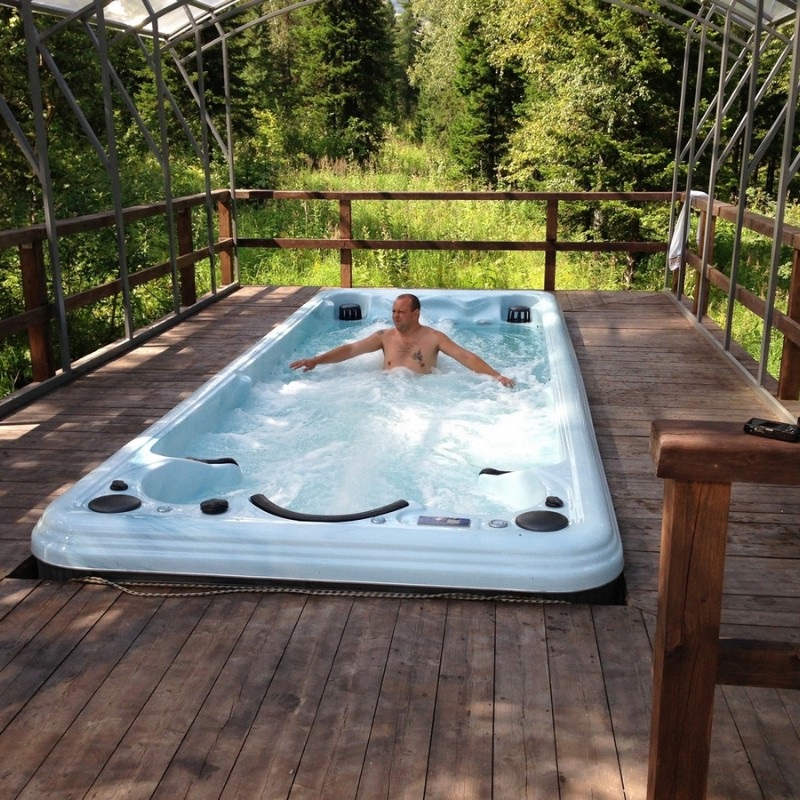
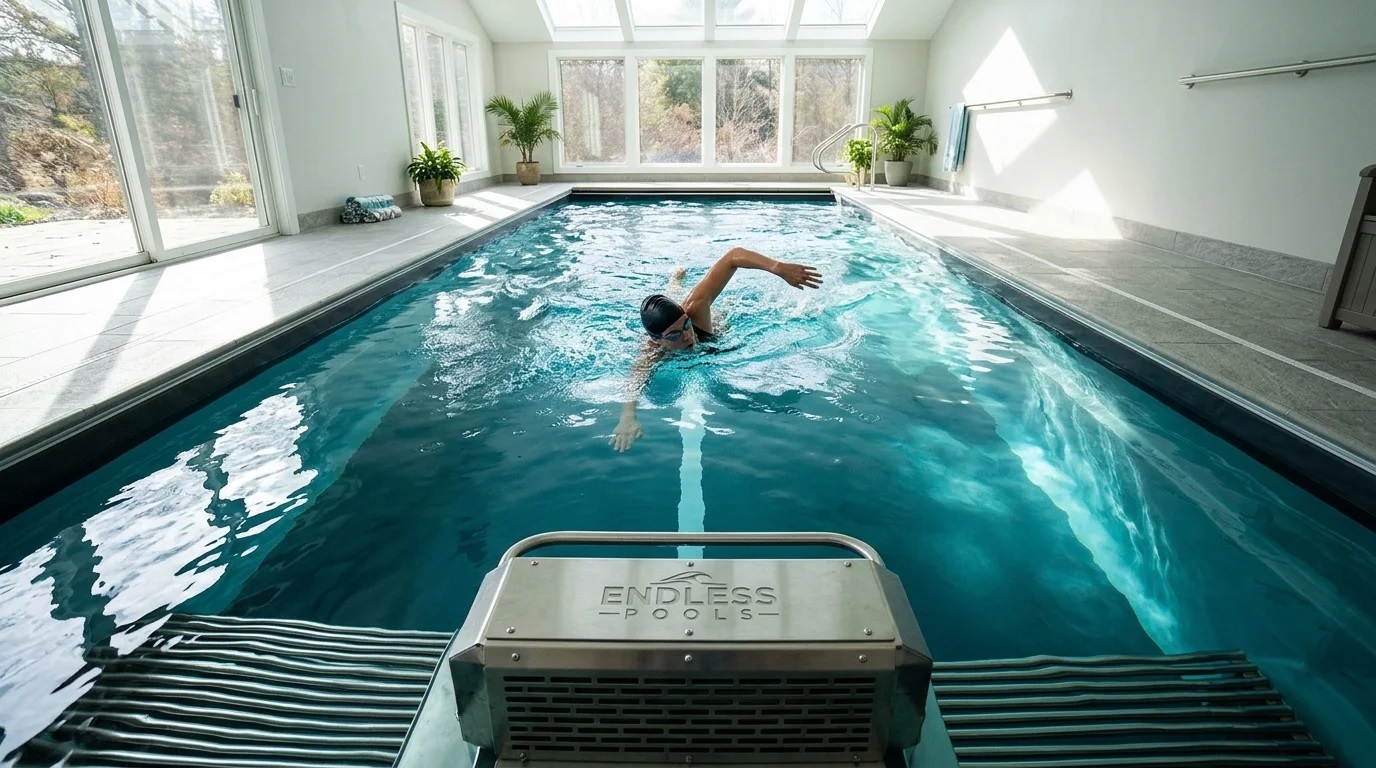
Flagship Endless Pools rely on a submerged, hydraulically driven propeller—or a dual-propeller assembly in performance models—mounted behind a protective stainless steel grille. Turning vanes and straightening channels condition the water before it enters the swim lane, moving up to 5,000 gallons per minute in a smooth, wide, bubble-free sheet that spans wider than a swimmer's shoulders and deeper than a full arm pull.
Traditional swim spas generate resistance by pumping water through high-velocity swim jets mixed with air. While modern wide-stream river jets on upper-tier swim spas produce a far smoother flow than older round nozzles, air-injected currents still introduce surface turbulence and extra buoyancy. That aerated water lifts a swimmer's hips slightly higher than natural open water, whereas a laminar propeller current closely replicates swimming in a quiet lake or competition lap lane.
Pacing Control and Stroke Mechanics
Serious swimmers appreciate precise speed calibration and unobstructed interior geometry:
- Speed range and digital pacing: Modular Endless Pools offer fine-grained electronic pace adjustments calibrated in minutes and seconds per 100 yards or 100 meters, reaching sub-1:10 per 100-yard sprint speeds on high-output models. Many jetted swim spas offer preset pump speeds or variable-frequency drives, though top flow velocities vary widely by pump horsepower.
- Unobstructed rectangular walls: A modular Endless Pool keeps a uniform rectangular cross-section from front to back, giving swimmers clear room for full-extension freestyle, breaststroke, and butterfly without clipping molded corner seats.
- Real-time stroke feedback: Endless Pools frequently pair with angled floor mirrors and waterproof pace displays mounted directly beneath the swimmer, making it easy to monitor hand entry, head position, and body roll mid-set.
Hydrotherapy, Seating, and Water Temperature
If your household wants both morning cardio workouts and evening hot tub soaking, water temperature management becomes the deciding factor.
Single-Zone vs. Dual-Zone Temperatures
Comfortable, safe lap swimming requires water between 80°F and 85°F. Exercising vigorously in 102°F water quickly leads to overheating, while soaking quietly in 82°F water feels chilly within minutes.
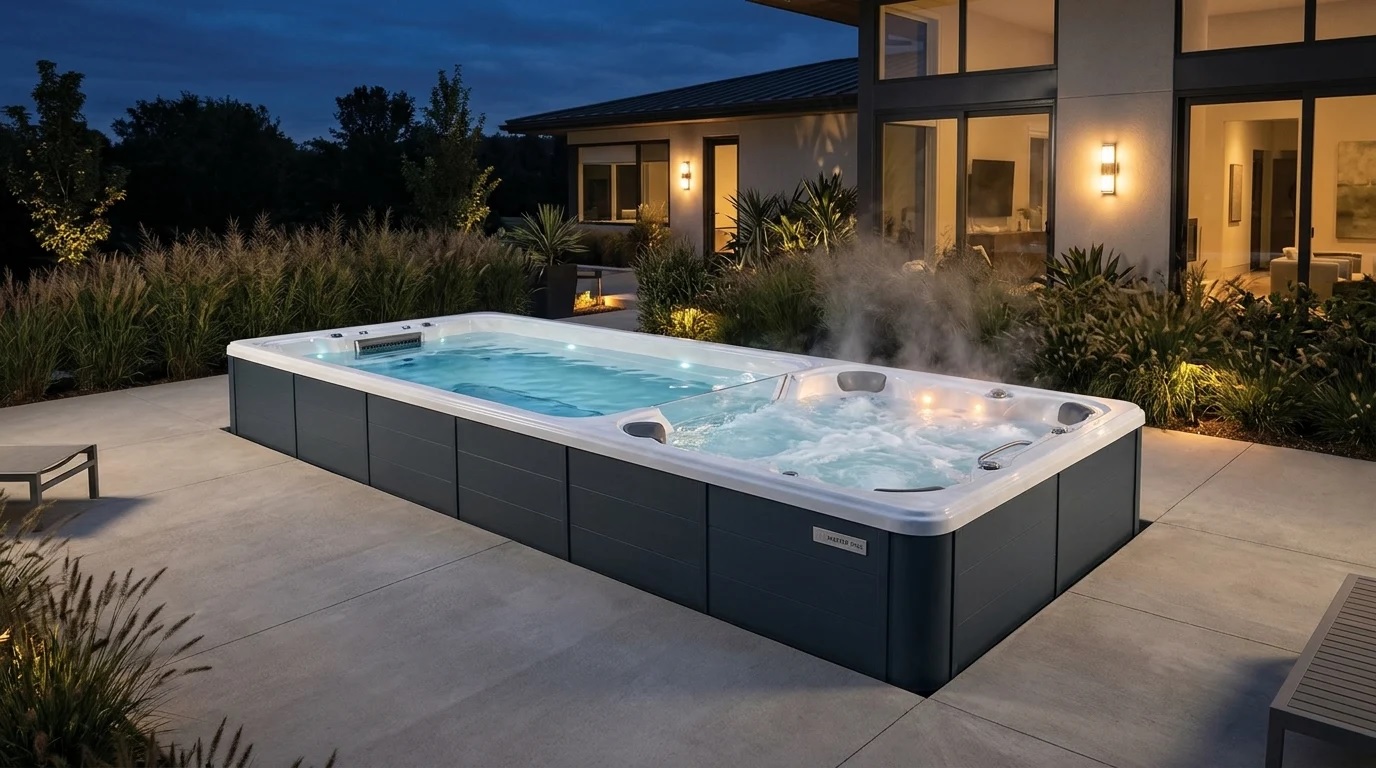
Single-zone Endless Pools and single-zone swim spas hold one shared body of water, meaning everyone must compromise on a single temperature or wait several hours for the heater to raise or lower the water between uses. Dual-zone swim spas eliminate that compromise by placing a permanent, insulated acrylic divider between the swim tank and an independent hot tub chamber. Owners can keep the swim side at 82°F for daily training while maintaining the spa side at 102°F with separate filtration, heating, and jet controls.
Built-In Massage Jets and Recovery
Acrylic swim spas excel at contoured hydrotherapy. Their molded shells incorporate ergonomic captain's chairs, cool-down steps, neck-and-shoulder waterfalls, and clusters of stainless steel massage jets targeting the back, hips, and calves. Modular Endless Pools prioritize an open, flat-floor exercise tank; while buyers can add a corner bench seat, basic hydrotherapy return jets, or an underwater hydraulic treadmill for low-impact walking and jogging, a modular pool does not replicate the sculpted lounge seating of an acrylic spa.
Installation, Footprint, and Site Access
Where you plan to put your pool often narrows the decision before you ever compare propulsion specs.
Indoor Basements and Tight Access Spaces
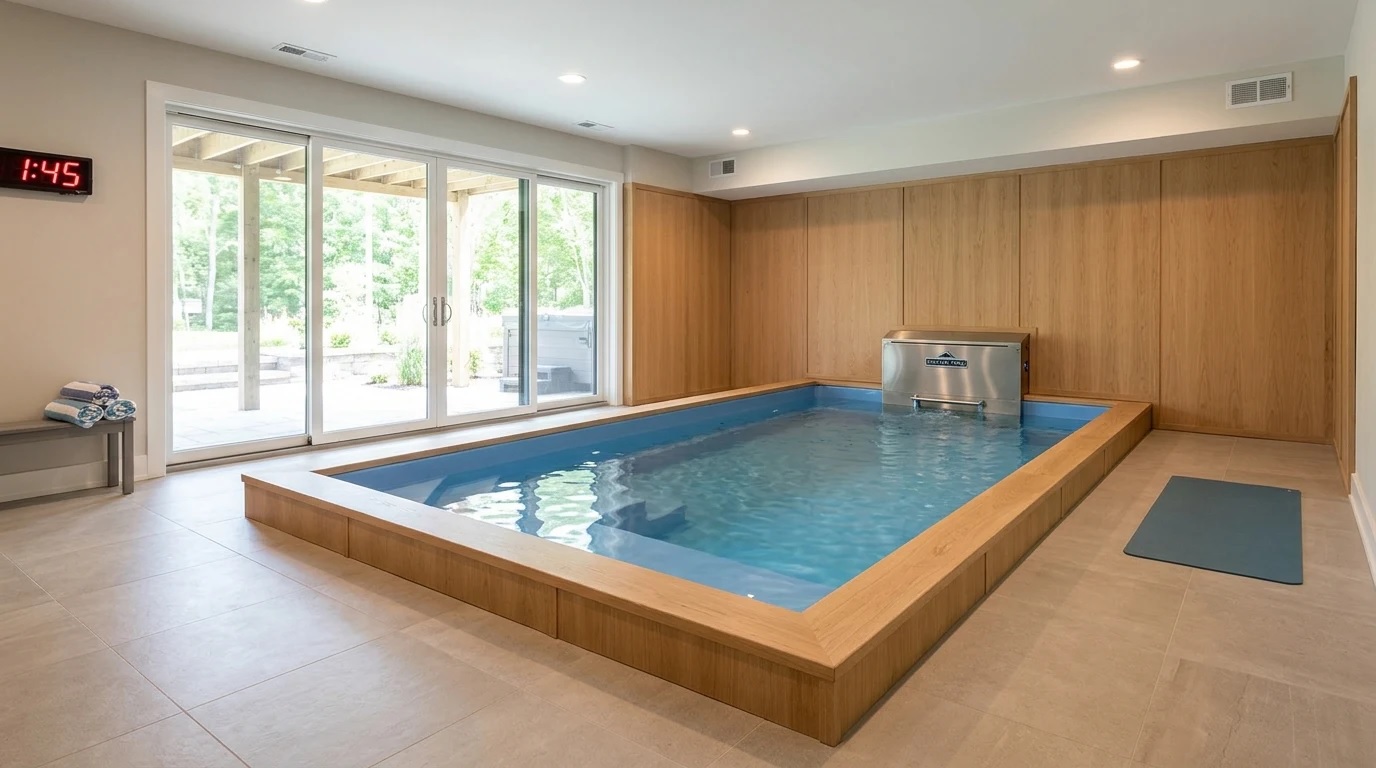
Modular Endless Pools hold a decisive advantage for indoor rooms and restricted urban lots. Every steel wall panel, rolled vinyl liner, coping section, and propulsion component passes easily through a standard 30-inch residential doorway or down a flight of basement stairs. Homeowners regularly install them inside walkout basements, converted garages, sunrooms, and walled courtyards without removing exterior walls.
Indoor installations do require thoughtful environmental planning. You will need a dedicated room dehumidifier or air-exchange system, moisture-tolerant wall and ceiling finishes, non-slip flooring with a perimeter drain, and a secure insulating cover to keep indoor humidity under control when the pool is not in use.
Pad Prep, Crane Delivery, and Power
A one-piece acrylic swim spa arrives fully assembled, so site logistics revolve around clearance and structural support:
- Foundation load: Both systems require a level, steel-reinforced concrete slab typically 4 to 6 inches thick, engineered to carry between 12,000 and 22,000 pounds once filled with water and swimmers.
- Delivery clearance: Positioning a 2,000-to-4,000-pound dry acrylic swim spa usually requires straight flatbed truck access or a crane lift over trees, fences, or rooflines, plus at least 24 to 36 inches of service clearance around equipment access panels.
- Electrical service: Most modular Endless Pools run on a dedicated 220V/240V 30-amp to 60-amp GFCI circuit, with a remote hydraulic power unit that can sit up to 75 feet away in a garage or utility closet for near-silent poolside operation. Single-zone swim spas typically require one dedicated 240V 50-amp or 60-amp GFCI circuit, while dual-zone swim spas often require two separate 240V circuits to power both heaters and pump banks simultaneously.
Purchase Price, Energy, and Maintenance
Upfront equipment quotes only tell part of the financial story; installation labor, utility draw, and component lifespans shape total ownership cost over a decade or more.
Upfront Equipment and Installation Costs
Entry-level single-zone acrylic swim spas typically start between $18,000 and $25,000, while larger 17-to-21-foot dual-zone or propeller-driven swim spas commonly land between $35,000 and $55,000 before crane rental, concrete work, and electrical hookup. Modular Endless Pools generally start around $25,000 to $32,000 for base models and range from $45,000 to $65,000 or more when configured with deeper walls, dual-propulsion swim currents, automatic retractable security covers, underwater treadmills, and custom deck surrounds.
Ongoing Energy, Liner, and Water Care
Full-foam insulated acrylic swim spas retain heat efficiently in cold northern winters and feature a hard, non-porous interior surface that lasts 15 to 20 years or longer with balanced sanitizer and pH levels. Modular Endless Pools also use thick insulating covers and optional wall insulation kits to keep monthly heating bills predictable, though their interior vinyl liners typically require replacement every 7 to 12 years at an average cost of $1,500 to $3,000 depending on pool dimensions and regional labor rates.
How to Choose Between an Endless Pool and a Swim Spa
Matching the vessel to your primary daily routine makes the decision straightforward:
- Choose a modular Endless Pool if your top priority is smooth, bubble-free lap swimming, triathlon preparation, customizable pool depth up to 6 feet, or indoor installation in a basement, garage, or sunroom.
- Choose a single-zone swim spa if you want a turnkey backyard fitness and family recreation pool delivered in one day with molded seating and simple maintenance.
- Choose a dual-zone swim spa if one person wants cool 82°F water for daily swim workouts while others want 102°F hydrotherapy massage seats ready at the exact same time.
Before committing to either design, schedule an in-water swim test at a local showroom so you can experience the difference between a laminar propeller current and an air-injected jet stream firsthand.