
Appearance

Outdoor Spa Maintenance Checklist for Busy Homeowners: Weekly, Monthly, and Seasonal Tasks
Outdoor spa maintenance often intimidates new owners, but a structured checklist breaks the work into manageable intervals that prevent the vast majority of problems before they develop. Spas operate as small, self-contained aquatic ecosystems. Warm circulating water, organic contaminants from bathers, and constant aeration create an environment where bacteria and algae multiply rapidly if sanitation and filtration slip. Owners who follow a consistent routine spend far less time on corrective cleanup and enjoy reliably clean, inviting water whenever they decide to soak.
This checklist organizes maintenance into four tiers based on frequency. Each tier builds on the previous one, and skipping a lower-frequency task inevitably creates extra work at the next service interval. The guidance below applies to most portable acrylic spas, inflatable hot tubs, and in-ground concrete or fiberglass spa pools.
Daily Water Sanity Checks
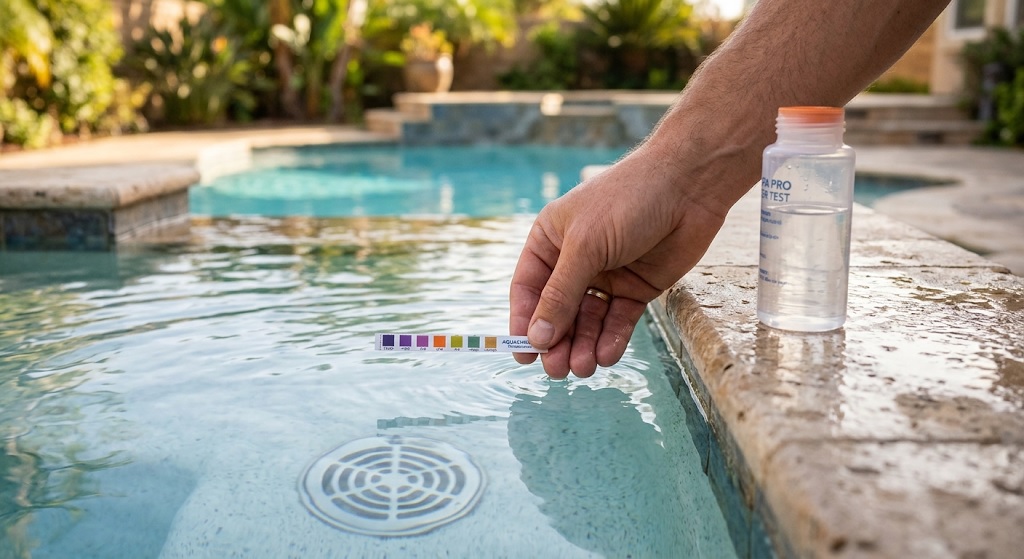
Spending sixty seconds looking at the water before each soak catches developing issues when they are still trivial to correct. Check whether the water is clear enough to see the bottom drain clearly. Cloudy or discolored water signals a sanitizer deficit, a filtration problem, or an emerging algae bloom that will be far harder to reverse once it progresses.
Verify that the sanitizer level is adequate. If the spa uses chlorine, a quick test strip confirms free chlorine between three and five parts per million. Bromine systems should read between four and six parts per million. If the reading is low, add the appropriate dose before soaking rather than after, so the sanitizer has time to circulate and neutralize contaminants while the pumps run.
Check the skimmer basket or surface skimmer weir for leaves, insects, and floating debris. Remove anything collected there to prevent restriction of suction flow. A clogged skimmer starves the pump of water, causing it to run dry and overheat. This simple debris removal takes seconds and protects the most expensive mechanical component in the spa.
Weekly Testing and Chemical Balancing
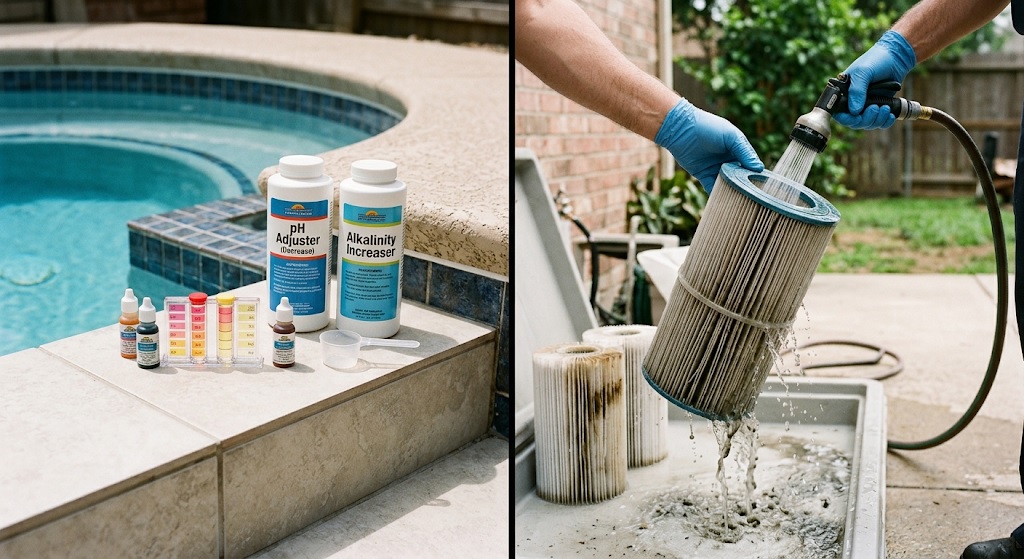
Weekly water testing forms the backbone of outdoor spa maintenance. Use a reliable liquid test kit or high-quality test strips to measure pH, total alkalinity, and sanitizer concentration. pH should sit between seven point two and seven point eight. When pH drifts above this range, calcium precipitates out of solution and forms crusty scale deposits on heating elements and jet nozzles. When pH drops too low, the water becomes corrosive and begins etching metal components and degrading rubber seals.
Total alkalinity acts as the buffer that keeps pH stable. Target a range between eighty and one hundred twenty parts per million. Low alkalinity causes pH to bounce wildly with each chemical addition, making balanced water nearly impossible to maintain. High alkalinity locks pH at an elevated level and resists adjustment. Raise alkalinity with sodium bicarbonate and lower it with muriatic acid or sodium bisulfate, adding small doses and retesting rather than making large single adjustments.
Shock the spa weekly with a non-chlorine oxidizer or an extra dose of chlorine to break down organic waste compounds that regular sanitizing cannot fully eliminate. Shocking eliminates chloramines and bromamines—the combined sanitizer byproducts responsible for the harsh chemical smell often mistaken for excessive chlorine. A properly shocked spa has little to no chemical odor.
Remove and rinse the filter cartridge weekly. A garden hose with moderate pressure dislodges trapped oils, hair, and debris from the pleated fabric. Spray from the inside outward to push contaminants out of the filter media rather than driving them deeper. Return the cleaned cartridge to the housing and confirm the filter lid is properly sealed.
Monthly Deep Maintenance Tasks
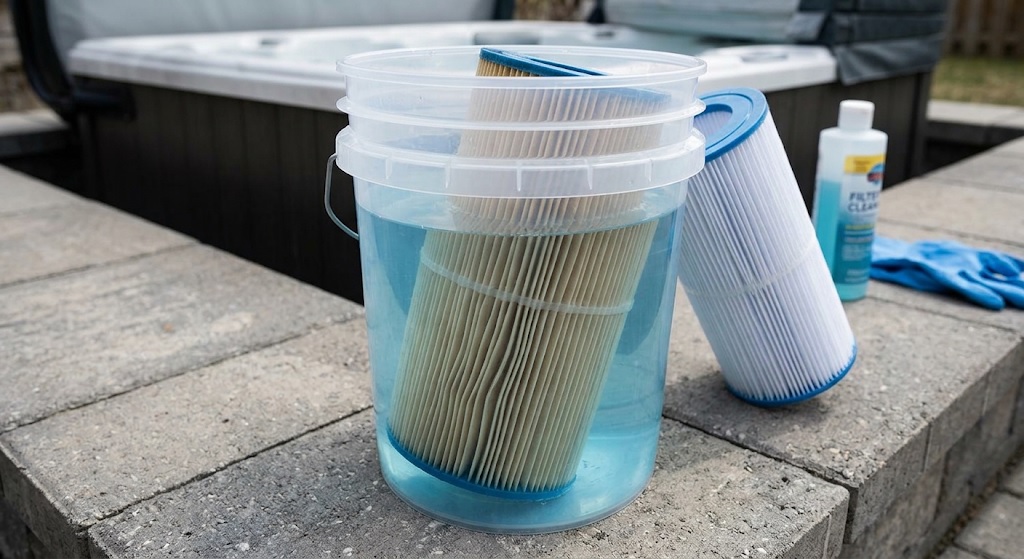
Monthly service addresses components that accumulate wear gradually. Soak the filter cartridge in a dedicated filter cleaning solution for at least one hour, preferably overnight. These chemical soaks dissolve body oils, lotion residues, and mineral deposits that plain hose rinsing leaves behind. After soaking, rinse thoroughly until no foam appears in the rinse water. Keeping a spare filter cartridge on hand allows you to swap in a clean one immediately and clean the dirty one at your convenience without taking the spa out of service.
Inspect the spa cover monthly.
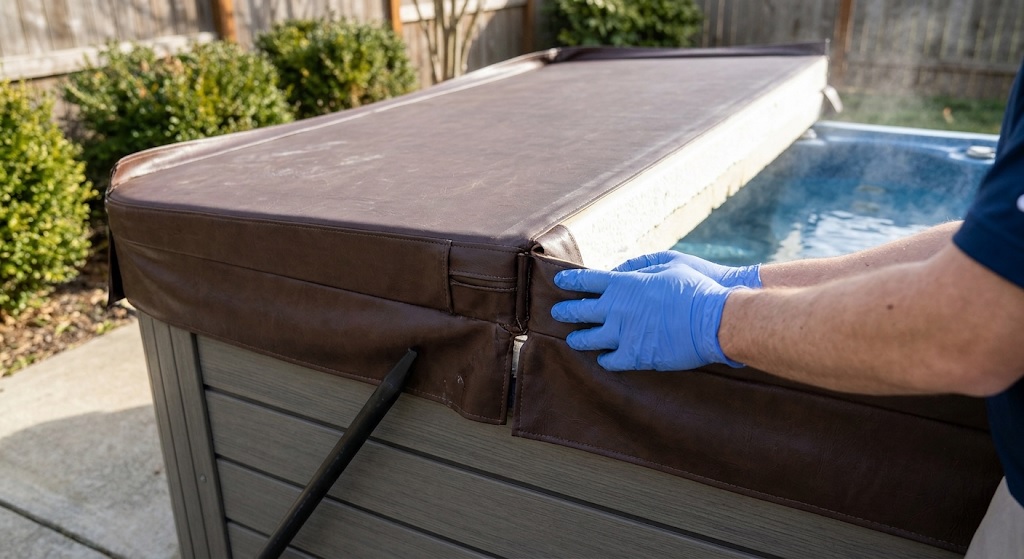
A well-fitting cover retains up to seventy percent of heating energy, making it the single most important efficiency component. Look for tears in the vinyl, waterlogging in the foam cores, and deterioration of the hinge seams. A cover that has absorbed water becomes extremely heavy, strains the lifter mechanism, and loses its insulating value. If the cores are saturated, replacement is the only remedy—no amount of drying restores waterlogged foam.
Check all visible plumbing unions, pump seals, and heater connections for moisture accumulation. Small drips often precede major failures. Hand-tighten any loose unions and replace O-rings that show cracking or compression set. Catching a slow weep at a union fitting costs minutes; ignoring it until the pump cycles dry under a heavy load can destroy the equipment.
Clean the spa shell at the waterline using a non-abrasive cleaner specifically formulated for acrylic or fiberglass surfaces. Body oils and cosmetic residues form a greasy ring at the waterline that bakes on under spa heating. Use a soft microfiber cloth and rinse the cleaned area thoroughly before refilling to avoid introducing chemical residues into the freshly balanced water.
Examine the spa cabinet and interior equipment bay for signs of pest activity. Rodents and insects are attracted to the warmth generated by spa equipment. Look for chewed wiring, nesting materials, and insect colonies near the pump and heater. Sealing gaps in the cabinet with mesh vent covers allows necessary ventilation while excluding larger pests.
Seasonal Care and Winterization
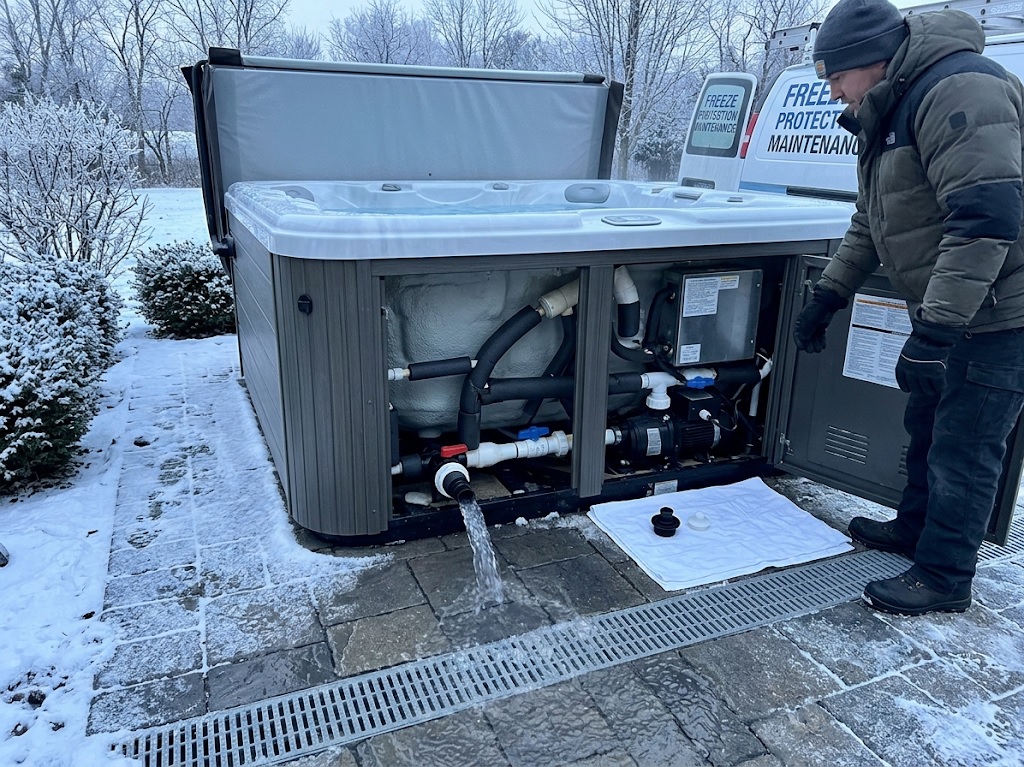
Seasonal tasks shift with climate conditions. In regions where temperatures remain above freezing year-round, the spa can operate continuously with standard weekly and monthly routines. However, winter operation demands additional attention to energy efficiency and freeze protection even when the spa stays in use.
Before cold weather arrives, verify that the freeze protection system functions correctly. Most modern spas include an automatic mode that activates the circulation pump when water temperature approaches the freezing point. Test this feature by lowering the thermostat setting temporarily and confirming that the pump engages. Insulate exposed plumbing runs in the equipment bay with closed-cell foam pipe insulation, securing it with UV-resistant tape. Do not use open-cell foam, which absorbs moisture and accelerates freeze damage.
If you plan to drain and shut down the spa for winter, the process requires thorough execution to prevent freeze damage. Turn off power at the breaker. Drain the spa completely through the main drain valve, then remove the drain plugs from the pump, heater, and any secondary equipment. Use a wet vacuum to extract residual water from plumbing lines and the filter housing. Blow air through the jets to clear standing water from the internal plumbing network. Add non-toxic plumbing antifreeze to trapped sections that cannot be fully blown dry, following manufacturer guidelines for quantity.
For spas remaining in operation through summer heat, monitor sanitizer demand closely. Warm water accelerates chemical consumption, and heavy summer use with sunscreen lotions and increased bather loads depletes sanitizer faster than cool-weather soaking. Test the water twice weekly during peak season rather than once. Top off water levels more frequently, as evaporation rates increase dramatically with high air temperatures and direct sun exposure.
Equipment Longevity and Replacement Planning
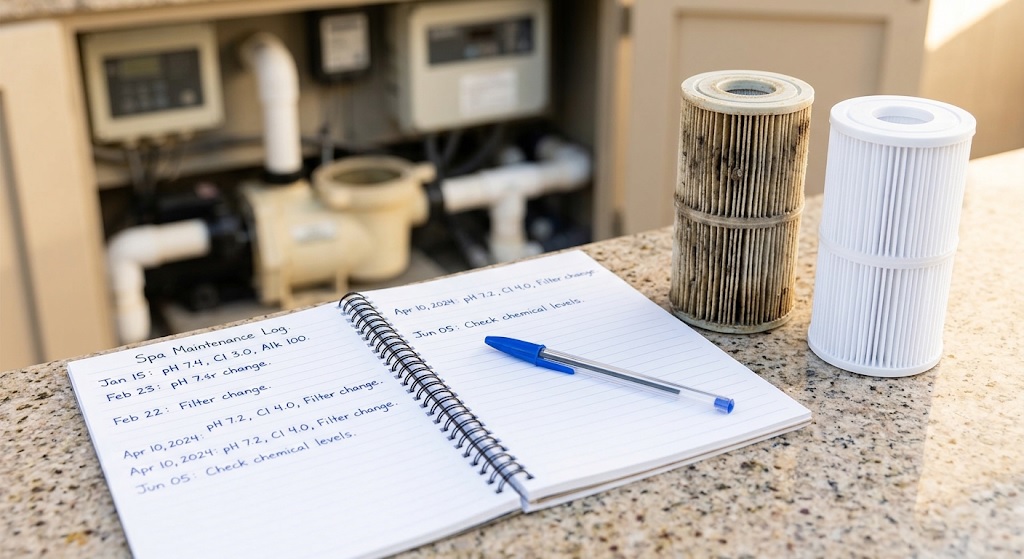
Beyond routine cleaning and chemical balancing, a few structural habits extend the working life of major components. Replace the filter cartridge every twelve to eighteen months regardless of apparent cleanliness. The filter media fatigues and loses trapping efficiency long before it looks worn. Running an expired filter forces the pump to work harder against restricted flow, shortening pump life.
Plan for water replacement every three to four months under normal use. Completely draining and refilling the spa flushes out dissolved solids that accumulate from chemicals, bather waste, and source water minerals. These total dissolved solids reach a point where they interfere with sanitizer effectiveness and cause persistent cloudiness that no amount of chemical adjustment can resolve. Draining also provides an opportunity for a thorough shell cleaning and inspection of components normally submerged.
Keep a maintenance log noting chemical readings, filter changes, and any repairs performed. A simple notebook with dated entries reveals patterns over time, such as recurring low pH or increasing filter cleaning frequency, that indicate developing issues. Reviewing the log before calling a service technician often shortens diagnosis time and reduces repair costs.
Creating Your Personal Routine
The most effective checklist is one tailored to your specific spa model, climate, and usage pattern. Start with the framework above and adjust based on your test results and water behavior. Bather load, source water chemistry, and exposure to sun and wind all influence how quickly the water shifts out of balance. Spas used daily by multiple family members require more frequent attention than a unit used twice weekly by a single occupant.
Consistency matters more than perfection. A slightly delayed filter cleaning causes no lasting harm. Allowing sanitizer to drop to zero for several days creates a bacterial bloom that requires draining, scrubbing, and refilling to correct. Establish the daily and weekly habits firmly, and the monthly and seasonal tasks become straightforward rather than overwhelming. A well-maintained outdoor spa delivers years of reliable, hygienic relaxation with minimal downtime and predictable operating costs.