
Dark Bamboo Floors Show Every Footprint: The Smudging Problem Explained
Dark bamboo floors show every footprint because a dark surface gives light dust, skin oil, and moisture nowhere to hide. The moment someone walks across a carbonized bamboo plank in socks or bare feet, a faint mark appears, and under raking light it reads like a smudge. Homeowners who fell for the look often feel betrayed by the upkeep, but the cause is plain optics rather than a faulty product.
This is the smudging problem, and it is less about bamboo being weak than about dark floors being honest. Any dark hardwood or laminate would do the same. Still, bamboo brings its own quirks, from the way it is colored to the sheen of its factory finish, and those details change how visible the marks get and how hard they are to remove.
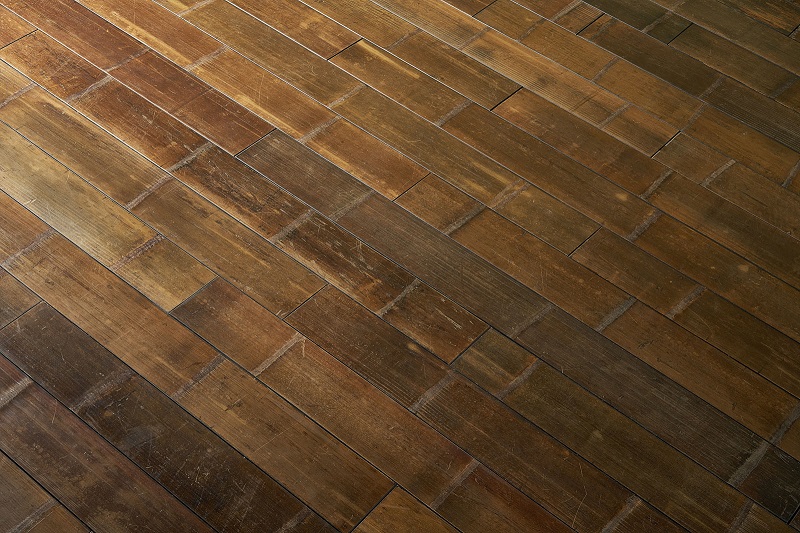
Why dark surfaces make footprints obvious
A floor is a stage, and contrast is the lighting designer. On a pale oak tone, a dusty footprint is close in value to the wood around it, so the eye skips it. On a deep espresso bamboo, the same footprint sits several shades lighter, and the difference jumps out from across the room.
Two things drive the effect. The first is value contrast: dark versus light. The second is the angle of the light. Footprints show worst when sunlight or a ceiling fixture rakes low across the grain, because the film of oil and grit catches the light differently than the bare finish. A room with soft, diffuse light hides the marks far better than a room with a single bright window.
Finish sheen matters as much as color. A gloss coat acts like a mirror, so any break in that mirror, a fingerprint, a heel mark, a smear, reads as a defect. A matte or low-lustre finish scatters light and softens those breaks, which is why the same dark bamboo looks calmer in a matte build than in a high-gloss one.
What makes bamboo different from other dark floors
Bamboo is grass pressed into planks, and the dark tones come from a cooking step. Carbonized bamboo is steamed so the sugars brown, giving the warm coffee color that sells so well. That color runs through the material, which is good for scratches, but it also means the floor is dark by nature, not just by stain on top.
Strand-woven bamboo, the dense type used in most modern flooring, has a fine, busy grain. Under a clear coat, that grain can create a subtle texture where footprints settle into the low spots. Horizontal and vertical grain bamboo show longer lines, and a footprint across those lines can look like a streak rather than a dot. None of this means the floor is damaged. It means the surface has character that catches residue.
The factory-applied coating also plays a part. Many bamboo floors ship with a UV-cured urethane that is smooth and a touch glossy. Smooth coatings let oils sit on top instead of soaking in, so the mark stays until you clean it. A wire-brushed or hand-scraped dark bamboo breaks up the light and hides prints better, at the cost of a rougher feel underfoot.
The usual causes of smudges on dark bamboo
Most marks are not dirt in the scrubbing sense. They are a thin film left by normal life.
Skin oil is the main offender. Bare feet and socks pick up the natural oils from skin, and those oils transfer to the floor as a faint, slightly darker patch. Pets leave the same kind of mark with damp paws. Dust and fine grit add the lighter scuffs, because they sit on the surface and reflect light back.
Moisture is the quiet partner. A damp footprint from a bathroom trip or a rainy entry leaves a ring as the water dries, and any dissolved residue stays behind. Even a clean damp cloth can leave a smear if the water carried a little soap or hard-water mineral.
Footwear is mixed. Outdoor shoes bring visible grit that scratches, but clean indoor shoes often leave less oil film than bare feet. The worst case is a sock foot that has walked through a kitchen, picked up a film of cooking oil, and then tracked it down the hall.
Cleaning that actually helps
The fix is routine, not harsh chemicals. A daily pass with a microfiber dust mop removes the loose grit before it can be ground in or smeared. For the oily films, a damp microfiber with a bamboo-safe cleaner, used lightly and dried with a second pass, takes the mark off without leaving its own streak.
The mistake people make is too much water. A soaking wet mop leaves rings on any dark floor and can swell the seams of a bamboo plank over time. Wring the mop until it is barely damp, work in sections, and never let a puddle sit. A spray bottle with diluted cleaner gives more control than a bucket.
Avoid oil soaps and wax polishes on a factory-finished bamboo. They build a film that attracts more prints and makes later removal harder. A neutral pH cleaner made for wood or bamboo is the safe choice, and it should be rinsed or wiped so no residue remains.
Choosing finish and sheen to hide prints
If you are still at the selection stage, sheen is the lever with the biggest payoff. Matte and satin dark bamboo hide footprints far better than gloss, and they suit most modern interiors. A wire-brushed texture adds another layer of forgiveness by breaking the light.
Color depth is the other lever. A medium walnut bamboo, still dark but not black, shows less than a true espresso. If the room gets strong side light or has a lot of foot traffic, stepping one shade lighter spares you a lot of cleaning.
Specifiers sometimes ask for the gloss because showroom lights make it pop. On a job site with windows, that same gloss becomes a fingerprint magnet. A satin build almost always ages better in a lived-in home.
Where dark bamboo still makes sense
None of this means dark bamboo is a bad buy. It reads as rich and grounded, it pairs well with light walls and metal accents, and it hides the dust that pale floors make obvious in a different way, the pale floors show the dark specks, the dark floors show the light films. The trade is simply which kind of mark you would rather manage.
Dark bamboo works best in rooms with controlled light, low shoe traffic, and owners who enjoy a quick daily sweep. Bedrooms, studies, and formal living rooms are kind to it. Busy kitchens, muddy entries, and homes with many pets and kids will test your patience more than the floor.
For those high-traffic zones, a lighter bamboo or a tougher tile near the door, with dark bamboo deeper inside the home, splits the difference. That layout keeps the look you want where it can survive.
Installation details that reduce smudging complaints
A tight, flat install helps more than people expect. Gaps between planks catch grit and read as dark lines under raking light, so proper acclimation and a level subfloor pay off. A quality vapor barrier under the floor keeps moisture from below from ghosting through as cloudy patches.
Acclimation is the step most often rushed. Bamboo that goes down before it matches the room's humidity can shift slightly, opening seams that then collect residue. A few days in the space before installation spares those marks.
Entrance strategy belongs in the plan, not as an afterthought. A coarse mat outside, a fine mat inside, and a no-shoes habit cut the footprint load by a wide margin. The floors that look clean in show homes stay clean in real homes because the dirt never reaches them.
A note on expectations
Part of the smudging problem is expectation, not material. A dark floor photographed in a styled room looks flawless because no one has lived there. A dark floor in a real home with children and a dog will show life, and that is normal. The goal is a floor you can bring back to presentable in ten minutes, not a floor that never marks.
Bamboo handles that goal well. Its hard, dense surface shrugs off the light abrasion that would dull a pine, and a refresh of cleaner brings the tone back without stripping. The owners who stay happy with dark bamboo are the ones who accepted the marking as a feature of the color and built a small habit around it.
Common questions
Do dark bamboo floors scratch more easily? No. The color does not change hardness. Strand-woven bamboo is among the harder flooring options. Dark floors just show the dust in a scratch more than light ones do.
Will a rug solve the smudging? A rug in the walking path hides the marks in that area, but the edges and the open floor still show prints. Rugs help, they do not remove the habit of cleaning.
Is carbonized bamboo weaker than natural? The steaming that darkens it softens the fiber slightly compared with unsteamed bamboo, but the difference is small for flooring use. Finish and traffic matter more than the color step.
Can the smudges be prevented entirely? Only by keeping feet off the floor, which defeats the purpose. They can be reduced with matte finish, low traffic, and a daily microfiber pass.
Bothbest
Bothbest is a China-based manufacturer of bamboo flooring and bamboo decking, supplying strand-woven and carbonized planks to distributors and project buyers worldwide. The factory focuses on stable, dense boards suited to both interior floors and outdoor decking, with finish and color options matched to real-site conditions.