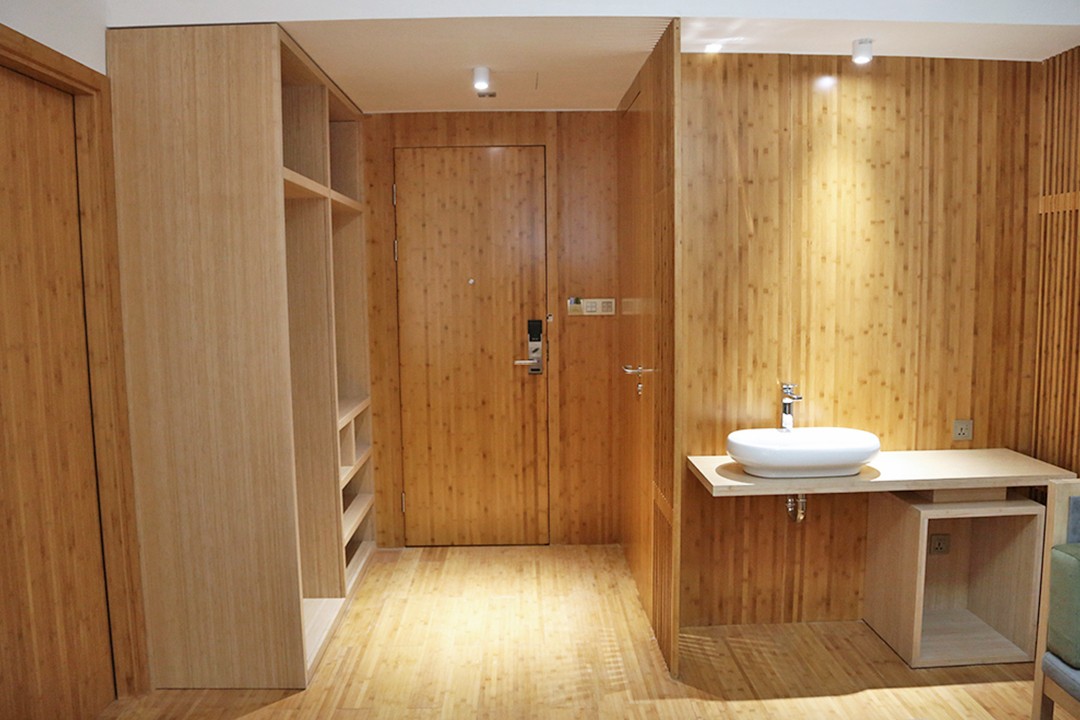
In the ever-changing landscape of modern craftsmanship, few materials have drawn as much attention as laminated Moso bamboo. Praised for its strength, sustainability, and refined visual appeal, it has become an increasingly valued resource among custom furniture makers. What makes it stand out is not only its environmental credentials but also its versatility in design, consistency, and exceptional mechanical properties. For artisans looking to balance eco-responsibility with innovation and precision, laminated Moso bamboo serves as an ideal medium.
The Growing Popularity of Sustainable Materials
Across the furniture industry, a clear shift is underway toward renewable and responsibly sourced materials. Consumers are more conscious about where their furniture comes from and how it is produced. This awareness has pushed designers and manufacturers to adapt their materials and processes to meet those expectations without compromising on quality or aesthetics. Bamboo, and particularly Moso bamboo (Phyllostachys edulis), has emerged as an outstanding solution.
Moso bamboo grows primarily in China and parts of Southeast Asia, and it has long been valued for its resilience and fast-growing nature. Some species of Moso bamboo can grow up to a meter per day, reaching maturity in just five years—an impressive contrast to hardwood trees that may need decades before harvest. Once mature, bamboo can be harvested repeatedly from the same root system without replanting, making it a fully renewable resource. Its environmental advantages are undeniable: it captures substantial amounts of carbon dioxide while releasing oxygen at a higher rate than comparable tree species, contributing positively to the balance of greenhouse gases.
What Makes Laminated Moso Bamboo Unique
While natural bamboo in its raw form has been used for centuries—from scaffolding to flooring—its laminated form presents new possibilities for modern custom furniture makers. Lamination refers to the process of slicing bamboo into strips, treating and drying them, and then gluing them together under high pressure to create wide, dense panels or beams. This technique brings uniformity and strength that raw bamboo poles cannot provide.
The result is a material with a fine, linear grain that echoes the natural beauty of wood but with enhanced stability and consistency. Laminated Moso bamboo panels resist warping and cracking far better than many softwoods. They can be manufactured in various thicknesses and finishes, allowing artisans to select from different colors—from pale blond to caramel tones achieved through carbonization—depending on the mood and character they wish to express in their designs.
For custom furniture makers who prioritize aesthetic precision, having a material that behaves predictably is invaluable. Laminated Moso bamboo can be cut, sanded, and finished much like hardwood, yet it offers greater flexibility and endurance under pressure. Whether shaping intricate chair legs, smooth table tops, or complex shelving designs, it responds reliably to fine craftsmanship.
Strength That Rivals Traditional Hardwoods
One of the primary reasons laminated Moso bamboo has gained respect in professional woodworking circles is its mechanical strength. Laboratory tests have shown that strand-laminated bamboo can outperform conventional hardwoods such as oak, maple, and even some engineered timbers in terms of compressive and tensile strength. This strength is achieved through its fibrous structure—dense cellular walls packed with silica and lignin—which provides natural reinforcement.
For furniture makers, this means durability and minimal material waste. Pieces created from laminated bamboo maintain their shape and functionality even after years of daily use. From sturdy dining tables to kitchen cabinetry and bed frames, Moso bamboo delivers the resilience required for high-performance furniture while remaining lightweight enough for easy handling and transportation.
Unlike certain hardwoods that tend to split or chip during machining, laminated Moso bamboo maintains a clean edge, making it suitable for detailed joinery and smooth finishing. Its uniform density minimizes unpredictability, which allows more precise work—an advantage essential to artisans who produce limited, custom-made pieces.
A Natural Fit for Modern Design
Bamboo’s distinctive linear aesthetic aligns perfectly with the preferences of modern furniture design—minimalist, organic, and honest in expression. Laminated Moso bamboo exudes a warm, natural tone that adapts seamlessly to a range of styles, from Scandinavian simplicity to mid-century modern and Japanese wabi-sabi. The visual harmony of its fine grain delivers a sense of calm to furniture pieces, serving both decorative and functional purposes.
Designers appreciate the creative flexibility that comes with bamboo. It takes stains, oils, and finishes exceptionally well, allowing artists to highlight either its natural tones or customized hues. When combined with other sustainable materials such as recycled steel or rattan, it creates striking contrasts that appeal to clients seeking both environmental awareness and distinctive aesthetics.
Beyond individual design appeal, laminated Moso bamboo brings a sense of authenticity. Its origin in traditional Asian craftsmanship lends cultural depth to modern creations, an aspect that resonates with consumers searching for products that tell a story through material and design.
Precision, Consistency, and Workability
Custom furniture making is an art form that depends heavily on measurement accuracy and consistency of materials. Unlike natural hardwoods, which often vary in grain direction and density depending on where they were cut from the tree, laminated bamboo panels are remarkably uniform. This uniformity helps eliminate irregularities during fabrication, resulting in smoother assembly, easier lamination of veneers, and more predictable joint performance.
Bamboo’s fiber alignment also means that it behaves more consistently under temperature and humidity changes. Furniture makers who have experienced swelling or contracting wood panels will find bamboo’s stability advantageous, especially in humid climates where traditional wood tends to warp.
In workshop conditions, laminated Moso bamboo machines cleanly on most common woodworking tools. It can be drilled, routed, or polished without excessive splintering. This ease of manipulation shortens production times for intricate pieces and enables artisans to experiment confidently with innovative shapes. Some furniture makers even combine laminated bamboo with CNC (computer numerical control) milling techniques to craft precise forms that highlight both technology and craftsmanship.
The Eco-Friendly Choice for Conscious Artisans
For custom furniture makers, working with sustainable materials is no longer a passing trend—it has become an ethical commitment. Laminated Moso bamboo fits seamlessly into this philosophy. It is harvested without clear-cutting forests, grown without the need for artificial irrigation, and processed using adhesives and coatings that meet formaldehyde emission standards. Many manufacturers of quality bamboo panels adhere to certifications such as FSC (Forest Stewardship Council) and E0 or E1 emission classes, which guarantee environmentally sound production principles.
Furthermore, bamboo plantations play a role in supporting rural economies by providing stable income sources for communities. The cultivation process promotes soil protection, biodiversity, and social welfare in growing regions—a holistic form of sustainability that supports environmental as well as socioeconomic balance.
For furniture makers catering to environmentally aware clients, emphasizing bamboo’s eco-profile becomes an added advantage. Each piece produced from laminated bamboo tells a story of renewal—a narrative that appeals to modern buyers who value craftsmanship rooted in ethical material sourcing.
Versatility in Function and Form
Laminated Moso bamboo offers remarkable adaptability across diverse furniture categories. Its ability to maintain strength while remaining lightweight allows it to serve in both structural and aesthetic roles. Dining tables, wardrobes, countertops, office desks, and shelving units made from bamboo showcase consistency and refined craftsmanship that rival any hardwood alternative.
The cross-laminated design of some Moso bamboo panels enhances rigidity and minimizes splitting under tension, making them ideal for surfaces that bear weight. Conversely, thinner laminated strips lend themselves to detailed accents such as drawer fronts, chair backs, or lamp bases. Furniture makers appreciate how easily bamboo can be integrated with other sustainable materials—glass, metal, stone, or even reclaimed wood—to create visually engaging combinations without losing coherence in design.
Additionally, laminated bamboo’s exceptional acoustics and natural vibration-absorbing qualities make it suitable for crafting musical instruments, acoustic panels, and studio furniture. This adaptable nature underscores its growing popularity among artisans who continually experiment with both artistic and functional innovation.
Minimal Waste and Efficient Production
Waste reduction is a major concern for custom furniture workshops. Laminated Moso bamboo contributes to efficiency by maximizing usable material. Because bamboo grows in naturally uniform poles and is processed into standardized strips, less of it goes unused during cutting and shaping. Offcuts and smaller sections can often be repurposed into accessories such as frames, handles, or decorative inlays.
From an environmental perspective, this low-waste characteristic supports circular manufacturing principles—an approach increasingly valued in sustainable craftsmanship. Additionally, many bamboo fabrication plants convert their by-products into biomass energy, reducing the reliance on fossil fuels and ensuring that even manufacturing processes maintain ecological balance.
The Future of Bamboo in Furniture Design
Laminated Moso bamboo represents an ideal harmony between performance and sustainability, nature and design, heritage and innovation. Its combination of strength, versatility, and renewable qualities embodies what forward-looking furniture makers aspire to achieve—craftsmanship that honors material integrity while responding to modern demand for responsible products.
Across workshops and studios worldwide, more artisans are discovering that bamboo’s story aligns perfectly with their creative mission. It offers a reliable foundation for experimentation, a distinct aesthetic language, and a sustainable alternative to traditional timber. What once was viewed as a humble grass has evolved into a material capable of shaping fine, handcrafted furniture worthy of any bespoke collection.
For those who shape, carve, and imagine, laminated Moso bamboo is not just another option—it is a statement of purpose: building beauty with conscience, strength with subtlety, and craftsmanship that reflects both endurance and empathy for the environment.