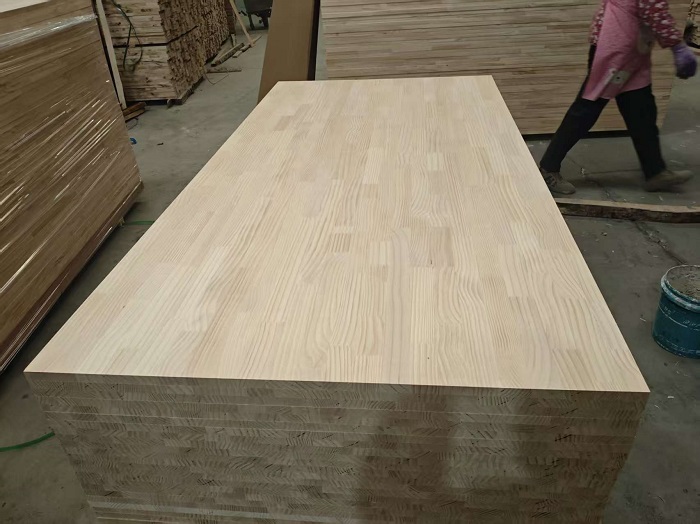
Finger joint pine plywood has gained steady attention among furniture makers who want a balance of affordability, reliability, and visual consistency. Its clean, uniform look makes it popular for desks, dining tables, workbenches, and custom furniture pieces where the surface must remain stable under daily use. Despite that appeal, questions often arise about long‑term durability: how well does this material hold up to weight, humidity, surface pressure, and day‑to‑day movement?
A recent series of durability tests provides clear, measurable insight into how finger joint pine plywood performs in practical environments. The findings help builders and buyers understand where this material excels, where caution is needed, and how its performance compares with other engineered wood products.
Material Characteristics Before Testing
Finger joint pine plywood combines two structural concepts. The core material relies on finger‑jointed pine strips, which are pieces of pine lumber joined end‑to‑end using interlocking “fingers” and adhesive. This eliminates weak points that might appear in longer, continuous boards. Over this core, manufacturers apply plywood‑style cross‑laminated veneers, forming a stable panel with improved dimensional resistance.
Several natural advantages emerge from this structure:
- Minimal warping due to the cross‑grain arrangement of the veneers
- Fewer defects than solid pine boards, as knots and cracks can be removed during processing
- Predictable surface grain suitable for painting or clear finishing
- Higher material yield and reduced waste because smaller timber pieces are used efficiently
Before laboratory testing began, moisture content, density, bonding quality, and surface flatness were measured on multiple sample panels. The average moisture content remained within a stable range suitable for interior furniture use, and panel density stayed consistent among all tested pieces. These conditions helped ensure that the results reflected true product performance rather than variable material preparation.
Load‑Bearing and Structural Strength Tests
For desks and tables, the ability to handle distributed and concentrated loads is crucial. Finger joint pine plywood underwent several types of mechanical testing, including bending strength, compression strength, and screw‑holding capacity.
Flexural Strength Performance
Samples were placed under a three‑point bending test to simulate weight applied to the center of a tabletop. The panels demonstrated:
- A strong elastic response, allowing slight flex without visible damage
- No surface cracking under standard residential and office load expectations
- Reliable resistance to sagging when properly supported along the frame
Compared with medium‑density fiberboard (MDF), the material showed noticeably better bending resilience. Against high‑grade birch plywood, it performed slightly lower but remained within acceptable ranges for non‑industrial furniture.
Edge Compression and Support
When used for desks, the edges often carry the weight of monitors, books, or hands leaning while working. Edge compression testing showed that the pine plywood core did not collapse or crumble, provided that the edges were sealed or laminated. Raw edges held strength during testing but benefited substantially from treatment, as sealed edges resisted moisture and abrasion more effectively.
Screw‑Holding Capacity
One of the common concerns with engineered wood is fastening strength. Screws placed both on the face and edges of the panels showed solid anchoring performance due to the finger‑jointed pine core. Fasteners held firmly during repeated load cycles without loosening or stripping. This is a notable advantage over particleboard, which tends to lose holding power more quickly.
Overall, the load‑bearing tests confirmed that finger joint pine plywood performs well for everyday use desks, lightweight dining tables, café tables, and workstations.
Surface Durability and Wear Resistance
Daily use brings friction, spills, and occasional impacts. To evaluate real‑life performance, multiple surface durability tests were performed, including abrasion, indentation, and stain resistance.
Abrasion Resistance
During abrasion tests, samples were exposed to simulated surface wear from repeated friction. The top veneer layer withstood moderate abrasion, and clear‑coat finishes increased protection significantly. Without finishing, the bare veneer showed some fiber raising after extensive rubbing, which is typical of softwood‑based panels. When sealed with polyurethane or water‑based coatings, the surface remained smooth, with visible wear only after prolonged testing.
Impact Resistance
Tables and desks experience accidental drops from pens, cups, or tools. Impact tests with small, weighted objects showed that the plywood absorbed minor impacts without denting deeply. Because pine is naturally softer than hardwood species, a fully hardened surface finish helps prevent impressions on high‑use surfaces. For office desktops, a medium‑hard or high‑hardness coating is recommended.
Stain Behavior
Different liquids were applied to mimic food, ink, and common household substances. Water wiped clean immediately with no staining. Coffee and tea cleaned off without discoloration if removed promptly. Markers left faint traces when left exposed for long periods, but sealed surfaces performed much better. This result reinforces the value of proper finishing for any work surface.
Moisture Stability and Environmental Response
Dimensional stability is one of the deciding factors in selecting material for furniture. To test moisture response, samples underwent controlled humidity cycles, including:
- High‑humidity exposure
- Rapid drying
- Alternating moisture environments over multiple days
The panels exhibited mild expansion but returned to their original dimensions after conditions normalized. No delamination occurred, and the finger‑joint core remained stable. This stability comes from the cross‑laminated veneer layers, which counteract much of pine’s natural tendency to expand across the grain.
While exterior‑grade plywood performs better in extremely humid environments, finger joint pine plywood can handle typical indoor conditions without noticeable issues. For kitchen tables or areas with steam exposure, a moisture‑resistant topcoat offers added protection.
Long‑Term Fatigue and Daily Use Simulation
To mimic the experience of years of daily use, long‑term fatigue tests were conducted. Panels were subjected to repeated bending cycles, surface pressure, and continuous distributed loads. After the full testing cycle:
- Joints between finger‑joint segments showed no separation
- Veneers remained flat
- The adhesive layers maintained their integrity
- No squeaking or internal fiber cracks were detected
This indicates that the combination of engineered core and plywood lamination offers strong fatigue resistance. Desks built with these panels should remain stable even after repeated repositioning, leaning, or extended computer use.
Aesthetic Behavior Over Time
Beyond structural strength, people choose finger joint pine plywood for its natural grain and clean appearance. Over the test period, the material demonstrated:
- Minimal yellowing under UV light when treated with UV‑resistant finishes
- Predictable color changes consistent with softwoods
- A stable grain pattern that did not distort or ripple
- Smooth finish retention when coated properly
The finger‑joint seams are visible but tend to complement modern Scandinavian or minimalist design styles. When coated with clear matte finishes, the seams create a light, patterned appearance. When painted, they disappear entirely.
Comparing Performance with Alternative Materials
Furniture builders often weigh finger joint pine plywood against MDF, particleboard, and higher‑grade plywoods. Based on the durability test results:
- Compared with MDF, finger joint pine plywood offers better bending strength, screw retention, and moisture tolerance.
- Compared with particleboard, it provides significantly higher edge durability and long‑term stability.
- Compared with birch or hardwood plywood, it performs slightly lower in hardness and acoustic dampening but remains more cost‑effective.
These differences help clarify where the material is best suited and where a higher‑grade plywood may be more appropriate.
Practical Recommendations for Furniture Use
Durability test results point to several practical recommendations:
- Use reinforced support frames for long desktop spans to maintain a completely flat surface.
- Seal edges to maximize moisture and abrasion resistance.
- Apply a durable finish for any work surface that will host electronics, books, or daily tasks.
- Avoid using the material outdoors unless fully weather‑treated.
- For painted furniture, choose a primer designed for softwoods to prevent uneven absorption.
Following these steps allows the material to reach its full performance potential.
Summary
Durability testing for finger joint pine plywood shows that it meets the requirements for most indoor tables and desks. It handles weight well, maintains structural stability, accepts fasteners securely, and resists ordinary surface wear when properly finished. Its moisture response remains controlled under typical indoor environments, and its fatigue resistance supports long‑term daily use. With thoughtful design and finishing choices, this material provides a reliable and visually appealing option for both home and commercial furniture projects.